Tag Archives: ken henry

Soros: ‘Very Cautious’ On China

27 Feb

International financier George Soros has confirmed concerns expressed by leading international economists on the possibility that the Chinese economy is in a “bubble”:

A hard landing for Chinese markets could come, Soros said, due to a significant increase in supply offset by falling demand. China’s regulatory authorities have managed the situation well thus far, he said, but he’s concerned about how various countries are maneuvering in the face of global imbalances…

I’m very cautious, until the economy cools off a little“…

“The overheating, the inflation, the harsh policy tightening is happening right now and it will continue to happen until the economy cools off. And with this explosion of credit, there are bound to be non-performing loans in due course. The extent depends on whether it is a hard landing or soft landing…”

Speaking about the global economic recovery, Soros commented:

“The recovery has been anemic; this was to be expected. But now, the increasing concern about rising sovereign debt is working against continued stimulus. And that increases the threat of a double dip. The rising concerns on sovereign debt increases the prospect of a double dip.”

Asked whether he thought that the major economies have taken sufficient action to address fundamental problems of the world economy in the wake of the Global Financial Crisis, such as global imbalances, Soros responded:

No. The global imbalances have continued to increase. Notably, China continues to run a very big current account surplus. That is one reason why an appreciation of the renminbi would be desirable. The task of correcting those imbalances hasn’t yet begun to be addressed.

Meanwhile, in Australia all our economic leaders remain convinced of a China-funded economic miracle, confidently expecting that the Chinese economy will give us up to 4 more decades of “unprecedented prosperity”.

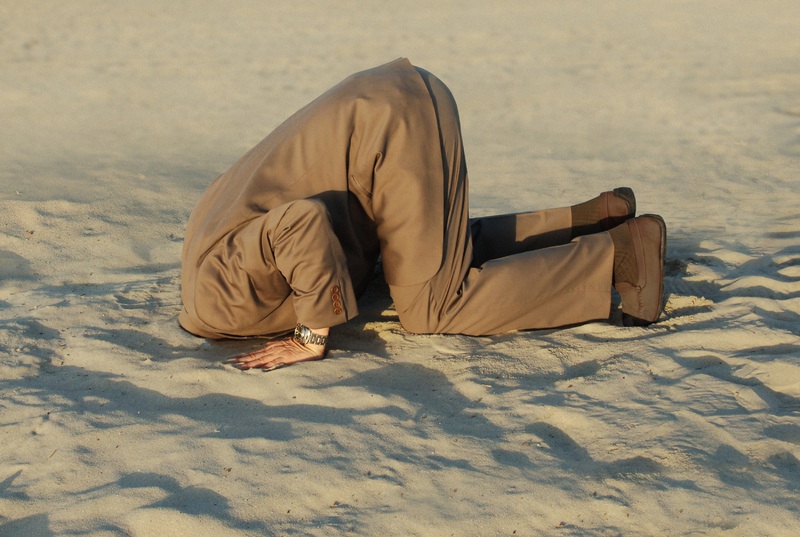
It seems only Barnaby Joyce has his head out of the sand.

Henry Sees Cyclical Angel Descending

26 Feb

As recently as October 2009, Treasury Secretary Ken Henry predicted a Golden Age for the Australian economy, that will “stretch to 2050”:

“While the global financial crisis has taken some of the heat out of our export prices, we should get used to the idea that we could have structurally higher terms of trade for some time, possibly for several decades,” he said.

In a speech at the Brisbane University of Technology, Henry said Australia’s population will grow as the mining boom, fuelled by demand from China and India, will continue to bring in immigrant workers. Handled correctly, he said, this could provide a “period of unprecedented prosperity”.

Henry pointed to growth in several Asian countries, which he said will give a boost to the mining boom that will see it last for several more decades into 2050.

Just one week ago, RBA Governor Glenn Stevens‘ colleague, Assistant Governor Philip Lowe, also had a vision of the cyclical angel returning from the heavens:

I am quite optimistic that story has some decades to run and that underlies much of the positives for the Australian economy,” Lowe told an economic development forum in Sydney.

“It is going to be a good 20 years for China and us,” he said.

And only 3 days ago, RBA Deputy Governor Rick Battelino too, joined in the angel chorus:

Mr Battellino was uncertain about how long the current boom would last, but said past booms had lasted around 15 years.

“On this occasion, the growth potential of countries such as China and India suggests that the expansion in resource demand could continue for an extended period, though this will depend at least to some extent on the economic management skills of the authorities in these countries, not to mention our own,” he said.

Illustration - nicholsoncartoons.com.au

Reassuring stuff. Or is it?

Three days ago, former Morgan Stanley chief Asia economist Andy Xie and hedge fund manager James Chanos saw something rather different:

“There’s a monumental property bubble and fixed-asset investment bubble that China has underway right now,” Chanos said. “And deflating that gently will be difficult at best.”

A glut of factories in China is “wreaking far-reaching damage on the global economy,” stoking trade tensions and raising the risk of bad loans, the European Union Chamber of Commerce in China said in November.

The risks are so great that a decade of little or no growth, as Japan experienced in the 1990s, can’t be dismissed, said Patrick Chovanec, an associate professor in the School of Economics and Management at Beijing’s Tsinghua University.

And two days ago, the former chief economist of the International Monetary Fund, Professor Ken Rogoff, also failed to see a Chinese cyclical angel descending. He saw the angel of doom:

China’s economic growth will plunge to as low as 2 percent following the collapse of a “debt- fueled bubble” within 10 years, sparking a regional recession, according to Harvard University Professor Ken Rogoff.

“We would learn just how important China is when that happens. It would cause a recession everywhere surrounding” the country, including Japan and South Korea, and be “horrible” for Latin American commodity exporters, he said.

Rogoff was one of very few economists who predicted the GFC.

Ken Henry, and all the boffins at the RBA… did not.

Barnaby vs Tanner vs Swan

25 Feb

Ever wonder how Barnaby’s economic qualifications stack up against Lindsay Tanner’s? Or against Wayne Swan’s, for that matter?

You might be surprised.

Barnaby Warns of Bigger GFC

25 Feb

Could the USA default on its debts?  Barnaby thinks so… and said as much in October and December last year:

The Nationals Senate leader Barnaby Joyce is openly canvassing an economic upheaval that would dwarf the current global financial crisis, triggered by the US defaulting on its sovereign debt within the next few years.

In unusually pessimistic comments for a senior political figure, Senator Joyce said the US Government was running such large deficits and building up so much debt that it was in a similar position to Iceland or Germany before World War II.

Is Barnaby alone in expressing this concern?  Rudd Labor would have you think so. Others agree with Barnaby:

It is not literally impossible that the Federal Reserve could unleash the Zimbabwe option and repudiate the national debt indirectly through hyperinflation, rather than have the Treasury repudiate it directly. But my guess is that, faced with the alternatives of seeing both the dollar and the debt become worthless or defaulting on the debt while saving the dollar, the U.S. government will choose the latter.

And this:

The economic landscape still looks pretty gloomy despite (because of?) massive increases in federal government spending by Congress. Want something else to worry about? What if your government suddenly went “belly up” on some or all of its public debt IOU’s?

Impossible you say? Not really.

And this:

The specter of a wave of sovereign debt defaults is becoming more of a possibility daily. Historically, waves of sovereign debt defaults follow periods of relative calm in credit markets. In short, sovereign defaults are contagious.

And this:

Mr Ip believes the government will sooner try and inflate down the debt than default, which is probably true. But he reckons that in the unlikely event America must choose between hyperinflation and default, the unthinkable could occur.

And this:

The list of countries at risk of bankruptcy is increasing by the day. The acronym used to be PIGS (Portugal, Ireland, Greece and Spain). It is now PIIGSJUKUS and growing. The main contenders are currently: USA, UK, Japan, Spain, Italy, Greece, Ireland, France, Portugal, Baltic States, Eastern Europe and many more. On a proper accounting basis all of these countries are already bankrupt, but since many nations can either print money, like the US and the UK, or increase their already high borrowings, like Greece and the Baltic States, they have technically avoided bankruptcy.

And this:

But the ultimate financial question – until recently, unthinkable – is now being asked. Yes siree, the mighty US government could default. That’s how much the world has changed.

So why do Kevin Rudd, Wayne Swan, Lindsay Tanner, Ken Henry, and Glenn Stevens, not wish to discuss concerns about US debt, and the implications of a possible sovereign default on the Australian economy?  According to Treasury secretary Ken Henry, to do so could “alarm” the community:

”I don’t mind discussing hypotheticals in general … [but] one has to be careful not to discuss publicly hypotheticals that are that extreme,” Dr Henry said.

Right. This is the same Ken Henry who never saw the GFC coming. No doubt he would have considered it just another “extreme” hypothetical back in 2007.

Don’t Mention the Debt

25 Feb

Even 12 months ago – before the Rudd Government began its massive second round of “stimulus” spending on school halls and insulation – noone wanted to talk about our debt problem:

Our overseas borrowing is the great unspoken. It is the one subject assiduously avoided in public by Kevin Rudd, Malcolm Turnbull, Ken Henry, APRA, the Reserve Bank and the big banks. They probably even gloss over the matter when chatting privately among themselves.

It is Australia’s Ponzi scheme. Bernie Madoff goes to Bondi. We keep getting those foreign dollars in while sending plenty out, but never quite as much, hoping no one will blow the whistle lest the whole game end.

Read the full article in the Feb 19, 2009 Sydney Morning Herald.

Design a site like this with WordPress.com
Get started