Tag Archives: GFC

Don’t Bet The House On China

4 May

An excellent and timely article by Karen Maley in today’s Business Spectator (reproduced here in full):

Kevin Rudd’s resource super profits tax has one massive risk – that commodity prices collapse before he gets to collect one cent of it.

Yesterday, the influential forecaster, Marc Faber joined those warning of problems ahead in China. “The market is telling you that something is not quite right”, he said in an interview on Bloomberg television. “The Chinese economy is going to slow down regardless. It is more likely that we will even have a crash sometime in the next nine to 12 months.”

On Sunday – as Kevin Rudd and Wayne Swan were announcing their new resources tax – China’s central bank made another attempt to dampen property market speculation. It lifted its reserve requirement ratio by a further half a percentage point, so that most Chinese banks will now have to hold 17 per cent of their deposits on reserve.

But this latest increase in the reserve ratio will likely prove as ineffective as the two previous rises in January and February this year. Many believe the Chinese property bubble will continue to expand for as long as the Chinese government maintains interest rates below the rate of inflation.

And that’s the core of the problem. The Chinese government is reluctant to increase interest rates because it risks exposing the huge fault lines that exist in the economy.

Over the past decade, China has built factories and expanded its manufacturing capacity in the expectation that the United States and Europe would continue to demonstrate a robust appetite for Chinese-produced goods. But western demand for Chinese products slowed in the wake of the financial crisis, leaving the Chinese economy with substantial overcapacity in manufacturing.

The problem was exacerbated during the financial crisis. With Chinese exports plunging, the Chinese government launched a massive economic stimulus program, equivalent to around 14 per cent of the country’s GDP. It also ordered Chinese banks to lend, and instructed Chinese state-owned companies to borrow.

The program had the desired result. The Chinese economy grew at an 11.9 per cent annual clip in the first three months of the year, the fastest pace since 2007. And we benefited too, because this strong Chinese growth pushed up the prices of our commodity exports, such as iron ore and coal.

But there are huge concerns over how the Chinese stimulus money was spent. Provincial governments, under instructions from Beijing to reach specified growth targets, undertook massive construction projects that have resulted in a glut of commercial office space, and huge shopping malls that are near-vacant. And much of the increase in bank lending was funnelled into property market speculation, pushing up housing prices to astronomic levels.

The Chinese government has tinkered with various measures to contain its property bubble – increasing the reserve requirement, lifting the minimum deposit that home buyers must have before they’re allowed to borrow, and urging banks to monitor their risks.

But it is loathe to raise interest rates for fear that it will cause mass defaults among manufacturers and property developers, leading to huge problem loans in the banking system.

Eventually, however, an end-point will be reached. Either the Chinese government will raise interest rates, or the property market bubble will collapse under its own weight. At that point, commodity prices will plummet, slashing the profits of the big mining companies.

And if this happens before 1 July 2012 when the new tax regime for the miners comes into effect, Rudd is unlikely to ever see a cent of his new resource super profits tax.

Betting the house on China is exactly what the numbskulls in the Rudd Labor government, the Treasury, and the RBA are doing.

Please take some time to review some of the many earlier articles in this blog, showing how the likes of Treasury secretary Ken Henry and RBA Governor Glenn Stevens have declared that the GFC is ‘over’, and forecast that (thanks to China) we are all set for a ‘period of unprecedented prosperity’ lasting until 2050.

What is vital to bear in mind always, is that these are the very same incompetents who all completely and utterly failed to foresee the onrushing Global Financial Crisis in 2008… even though its first wave had already broken in the USA and on global share markets during 2007!
China May ‘Crash’ In 9-12 Months

4 May

Noted investor and publisher of the fabled “Gloom, Boom and Doom” report, Dr Marc Faber, warns that the Chinese economy may crash within the next 9 to 12 months.

From Bloomberg:

Investor Marc Faber said China’s economy will slow and possibly “crash” within a year as declines in stock and commodity prices signal the nation’s property bubble is set to burst.

The Shanghai Composite Index has failed to regain its 2009 high while industrial commodities and shares of Australian resource exporters are acting “heavy,” Faber said. The opening of the World Expo in Shanghai last week is “not a particularly good omen,” he said, citing a property bust and depression that followed the 1873 World Exhibition in Vienna.

“The market is telling you that something is not quite right,” Faber, the publisher of the Gloom, Boom & Doom report, said in a Bloomberg Television interview in Hong Kong today. “The Chinese economy is going to slow down regardless. It is more likely that we will even have a crash sometime in the next nine to 12 months.”

Faber joins hedge fund manager Jim Chanos and Harvard University’s Kenneth Rogoff in warning of a crash in China.

China is “on a treadmill to hell” because it’s hooked on property development for driving growth, Chanos said in an interview last month. As much as 60 percent of the country’s gross domestic product relies on construction, he said. Rogoff said in February a debt-fueled bubble in China may trigger a regional recession within a decade.

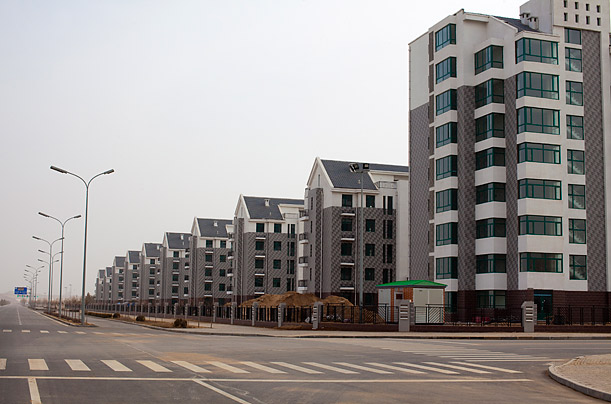
For those who doubt that China is currently experiencing the global mother of all real estate bubbles, take a look at these pictures from Time magazine, showing just how massive speculative over-investment in property construction has left China with literal ‘ghost cities’.

House Prices Tipped To Implode

3 May

While Barnaby may not have spoken about private debt, it is arguably the great threat to Australia’s economy.  The first to suffer from excessive debt burdens are the thousands of overextended First Home Buyers.

From The Australian:

Australia is in the midst of an unsustainable housing bubble that could burst at any time, warns the man who predicted the global credit bust of 2007.

Edward Chancellor, of US investment bank GMO, says the Australian economy is yet to emerge from the global financial crisis, despite the widespread belief it has escaped the worst of it ahead of the rest of the world.

Mr Chancellor, whose Crunch Time for Credit? was published in 2005, estimates Australian house prices are more than 50 per cent above their fair value – a once in 40-year event. “If house prices were to revert to their historic long-term average (ratio of average price to average income) they would fall quite considerably,” he told The Australian.

He described Australia’s banking system as a “cartel” and said luck rather than skill had allowed the Australian economy to fare better in the global financial crisis than other developed economies.

“My view is Australia had a private sector credit boom just like the US and the UK and it had a real estate boom,” he said.

“Those are the facts and you can’t paper over them.

“In this environment, house prices rose last year and that seems to me to actually have exacerbated the problem.

“The problem is the bubble and that hasn’t gone away.”

A key area of concern for Mr Chancellor was first-home buyers. As interest rates rose, the ratio of their mortgage repayments to their income would rise to very high levels, he said.

“It’s the rising interest rates, particularly with real estate bubbles, that tend to generate the collapse,” he said.

Another potential trigger was China, particularly if the demand for iron ore, coal and liquefied natural gas were to collapse.

“We would see the Chinese demand for Australian commodities as being potentially vulnerable,” Mr Chancellor said.

UPDATE:

The latest housing data says that our housing bubble – fuelled by years of easy credit, the First Home Owners Grant, and propped up during the GFC by Rudd Labor’s doubling of the FHOG – is now running out of control.

From The Australian:

Australia’s established house prices soared 20 per cent in the 12 months to March, deepening fears that a house-price bubble would emerge, and at the same time clearing the decks for a further rise in interest rates tomorrow.

The annual rise in house prices was the fastest ever recorded by the Australian Bureau of Statistics data series, which began in mid-2002. A rise of 4.8 per cent over the fourth quarter of 2009 was the second-biggest quarterly increase.

“This is a shocker,” said Rob Henderson, head of Australian economics at National Australia Bank. He added that the Reserve Bank of Australia now needed to get more aggressive, and acknowledge the need for a restrictive policy stance.

ANZ: Greece Could Affect Oz Banking

30 Apr

Yesterday I posted about how vulnerable Australia’s banking system is to the spreading debt contagion in the Eurozone. It seems that ANZ chief Mike Smith shares the concern for the same reason – our banking system’s heavy reliance on getting funding from the international markets, which are again beginning to freeze up due to concerns about counterparty risk.

From Business Spectator:

Australia and New Zealand Banking Group Ltd (ANZ) chief executive Mike Smith has warned that sovereign debt problems in Europe have the ability to affect Australian markets.

Speaking to reporters after the bank’s first-half results were released, Mr Smith said the “contagion issue is now very real”, in reference to Europe’s sovereign debt problems.

Mr Smith said the crisis may affect Australia in terms of its dependence on access to the international credit market, and said the concern was very relevant to businesses across the country.

“I think it will probably have an effect on equity and credit markets, but credit markets I think is more relevant to the Australian situation,” he said.

Roubini: Rising Sovereign Debt Leads to Defaults

30 Apr

Nouriel Roubini, one of just a dozen economists who publicly forecast the GFC, and who recently declared that ‘risky rich’ countries are in greatest danger of default, comments again on the rapidly spreading sovereign debt crisis (from Bloomberg):

Nouriel Roubini, the New York University professor who forecast the U.S. recession more than a year before it began, said sovereign debt from the U.S. to Japan and Greece will lead to higher inflation or government defaults.

“The bond vigilantes are walking out on Greece, Spain, Portugal, the U.K. and Iceland,” Roubini, 52, said yesterday during a panel discussion on financial markets at the Milken Institute Global Conference in Beverly Hills, California. “Unfortunately in the U.S., the bond-market vigilantes are not walking out.”

“The thing I worry about is the buildup of sovereign debt,” said Roubini, a former adviser to the U.S. Treasury and IMF consultant, who in August 2006 predicted a “painful” U.S. recession that came to fruition in December 2007. If the problem isn’t addressed, he said, nations will either fail to meet obligations or see faster inflation as officials “monetize” their debts, or print money to tackle the shortfalls.

Roubini, who teaches at NYU’s Stern School of Business, told attendees at the Beverly Hilton hotel that “Greece is just the tip of the iceberg, or the canary in the coal mine for a much broader range of fiscal problems.”

“Eventually, the fiscal problems of the U.S. will also come to the fore,” Roubini said during the panel discussion. “The risk of something serious happening in the U.S. in the next two or three years is going to be significant” because there’s “no willingness in Washington to do anything” unless forced by the bond markets.

Barnaby Joyce began trying to draw attention to the dangers of growing sovereign debt – warning of a coming day of reckoning in the USA and Europe and here in Australia – as far back as October 2009. As I have shown in countless posts on this blog, many leading economists, financiers, and informed commentators in other countries have been raising almost exactly the same concerns as Barnaby.

Few in Australia chose to listen.

Instead, Barnaby was ridiculed by the government and the media for every minor gaffe or slip of the tongue, his every statement misquoted or twisted out of context. With the ultimate result that he lost his position as opposition Finance spokesman thanks to the relentless attacks on his economic credibility. Despite his being better qualified to comment on finance than the entire Rudd Government economic team.

Only weeks later, those who do choose to look and listen can see ever more clearly… Barnaby Is Right.

OECD: Greek Crisis ‘Like Ebola’

29 Apr

From Bloomberg:

European policy makers may need to stump up as much as 600 billion euros ($794 billion) in aid or buy government bonds if they are to stamp out the region’s spreading fiscal crisis, said economists at JPMorgan Chase & Co. and Royal Bank of Scotland Group Plc.

With Greece’s budget turmoil infecting markets from Rome to Madrid, economists are urging German Chancellor Angela Merkel, European Central Bank President Jean-Claude Trichet and other officials to come up with unprecedented measures. Other steps could see governments guaranteeing bonds and the ECB abandoning collateral rules or reviving unlimited lending to banks, the economists said.

As OECD head Angel Gurria likens the crisis to the Ebola virus, Europe may need to come up with a plan equivalent to the $700 billion Troubled Asset Relief Program deployed by the U.S. after the collapse of Lehman Brothers Holdings Inc. “It is perhaps time to think of policy options of the last resort in the current sovereign crisis,” said David Mackie, chief European economist at JPMorgan in London.

“This is like Ebola,” Organization for Economic Cooperation and Development Secretary General Gurria told Bloomberg Television yesterday. “It’s threatening the stability of the financial system.” The World Health Organization calls Ebola “one of the most virulent viral diseases known to humankind.”

‘Shock And Awe’ Needed To Save Eurozone

29 Apr

Following close on the heels of the extraordinary revelation by Ben Bernanke that the US Federal Reserve has printed $1.3 Trillion out of thin air to buy toxic Mortgage Backed Securities and prop up the US economy, now the European Central Bank may have to invoke emergency powers in order to engage in massive money printing to prop up the collapsing European bond markets.

From the UK’s Telegraph:

The European Central Bank may soon have to invoke emergency powers to prevent the disintegration of southern European bond markets, with ominous signs of investor flight from Spain and Italy.

“We have gone past the point of no return,” said Jacques Cailloux, chief Europe economist at the Royal Bank of Scotland.“There is a complete loss of confidence. The bond markets are in disintegration and it is getting worse every day.

“The ECB has been side-lined in the Greek crisis so far but do you allow a bond crash in your region if you are the lender-of-last resort? They may have to act as contagion spreads to larger countries such as Italy. We started to see the first glimpse of that today.”

Mr Cailloux said the ECB should resort to its “nuclear option” of intervening directly in the markets to purchase government bonds.

This is prohibited in normal times under the EU Treaties but the bank can buy a wide range of assets under its “structural operations” mandate in times of systemic crisis, theoretically in unlimited quantities.

The issue of the ECB buying bonds is a political minefield. Any such action would inevitably be viewed in Germany as a form of printing money to bail out Club Med debtors, and the start of a slippery slope towards in an “inflation union”.

But the ECB may no longer have any choice. There is a growing view that nothing short of a monetary blitz — or “shock and awe” on the bonds markets — can halt the spiral under way.

Greek Default Could Have Lehman-Like Impact

29 Apr

The rapidly spreading Greek debt contagion poses a very real and present danger to the Australian banking sector, and thus to our economy. Why? Because our banking system is desperately overreliant on sourcing its funding from the global capital markets.

From The Big Chair:

The chief executive of National Australia Bank, Cameron Clyne, referred last week to Australian banks’ dependence on wholesale funding markets as their Achilles heel.

The Treasury secretary, Ken Henry, has also talked about Australian banks not being “well insulated” from the fallout of events like the Lehman Bros collapse, and the International Monetary Fund has said Australian banks are exposed to rollover risks on their short-term wholesale funding.

On average, Australian banks are sourcing just under a third of their funding from overseas wholesale markets and still too much of their existing borrowings are short term.

Australian banks are among the more vulnerable plays in the world to another Lehman-style event because of their dependence on overseas wholesale markets, which have proven already they can freeze up for extended periods.

It is these very same wholesale markets that are now trembling with trepidation at the consequences of the Greek – and now Eurozone – debt crisis.

From the UK’s Independent:

Why does Greece’s debt crisis matter to the rest of us? The answer, in a word: contagion.

If Greece defaults or crashes out of the euro it will send an almighty shockwave through the global capital markets. First of all, French and German banks, which are estimated to hold up to 70 per cent of Greece’s debt, will register writedowns. If their exposure is great enough, they could even go bust.

The fear that commercial banks were on the verge of failure was responsible for the last credit crunch as financial firms grew wary of lending money to each other at anything other than penal interest rates. If that fear of failure returns, we might witness another savage contraction in lending. And another credit crunch would open the way for the long-feared “double dip” recession.

Most Australians remain oblivious to this threat of another, much larger wave of the GFC. Doubtless this is largely because our “experts” continue to tell us that the GFC is “over”, while preaching the dawning of a “period of unprecedented prosperity”, and downplaying any concerns for this country. Just as they did in 2008 when they all completely failed to foresee the onrushing first wave of the GFC.

From The Australian (Feb 2010):

Investor confidence was roiled in recent weeks on fears of sovereign default in Europe and some signs that the broader global economic recovery was slowing as policy stimulus measures wound down.

Dr Debelle (Assistant Governor of the RBA) said risks that still existed did not relate to Australia or Asia, however, where bank balance sheets remained in sound condition – instead they referred to banks in Europe and the US, where poor macroeconomic conditions were expected to weigh on loan books.

Cost of Living Pressures Increase

28 Apr

Media Release – Senator Barnaby Joyce, 28 April 2010:

Senator Barnaby Joyce noted today that the release of the latest consumer price index figures show that electricity prices have increased by 26%, in real terms, since the election of the Rudd Government. These results are partly due to their Minister for Infrastructure’s complete failure to build on the Howard Government’s legacy of successful National Competition Policy, as shown by reports in the Australian Financial Review today.

Senator Joyce said that “The Labor party are incapable of decisive outcomes because of their insatiable desire to put polls ahead of statesmanship. Even their own core issues, such as the ETS, are jettisoned as the need requires.

“This government has shown that they cannot deliver on bread and butter issues such as infrastructure. The implausible and pathetic episodes of spending on the home insulation program and the building the education revolution are part and parcel of Australia’s debt currently reaching almost $137 billion. But real investment to bring real outcomes in power, water, roads and rail has been left wanting.

“Minister Albanese’s claim yesterday that the infrastructure reform agenda was “as full as it ever was” simply reflects the Rudd Government’s inaction in this important area. The COAG Reform Council has reported that this government is failing to progress reform in 4 out of 8 competition areas, including energy and transport.”

Reports today in the Australian Financial Review today suggest the government is trying to reinvigorate National Competition Policy.

In response Senator Joyce commented, “What has taken them almost three years? This government has been busy announcing flashy projects and big spending but ignored the hard work necessary to get more out of our existing infrastructure stock. We have waited 12 months for the National Freight Strategy and where is the greater transparency and cost-benefit analysis that this government promised? Greater efficiency, not bigger spending, is what will help reduce electricity, gas and water prices.”

Electricity prices have increased 11 per cent a year on average, in real terms, since the election of the Rudd Government. In comparison, during the Howard Government, electricity prices increased by an average of 0.5 per cent year, in real terms.

More Information- Jenny Swan 0746 251500

Greece Downgraded To Junk Status

28 Apr

Readers will be aware that I’ve been highlighting news about the Greek debt situation for some months. As a member of the European Monetary Union, and the Eurozone country with the gravest debt situation, it was always likely to be the first domino to fall.  Now it has.

From AAP:

Greece’s debt has been downgraded to junk status by Standard & Poor’s amid mounting fears that the debt crisis in Europe is spiralling out of control.

In a statement on Tuesday, the agency says that it is lowering its rating on Greece’s debt to BB+ from BBB- – that means that the country’s debt does not carry the investment grade tag.

The agency is also warning debtholders that they only have an average chance of between 30 to 50 per cent of getting their money back in the event of a debt restructuring or default.

European stock markets and the euro sank on Tuesday amid growing fears that the Greek debt crisis will spread to other weak eurozone countries, with Portugal now in the firing line.

“It can really be summed up in one word – contagion,” said CMC Markets analyst Michael Hewson.

The markets fell after Standard & Poor’s, a leading international ratings agency, downgraded Greek sovereign debt to junk status and cut Portugal’s long-term credit score by two notches.

The London stock market dived 2.61 per cent, the Frankfurt DAX sank 2.73 per cent and the CAC 40 in Paris plunged by 3.82 per cent. The Lisbon stock market sank by 5.36 per cent and Athens plunged six per cent.

The euro, which has been rocked for months over the debt drama in Greece, plunged again against the US and Japanese currencies, falling to $1.3250 from $1.3378 a day earlier and to Y123.46 yen from Y125.72 on Monday.

….

“Greece’s fiscal problems, and the market’s lack of confidence in dealing with them, are spilling over to other countries seen as having a kindred fiscal spirit,” said Patrick O’Hare at Briefing.com.

Greece has asked the European Union and International Monetary Fund to activate a three-year rescue package worth up to E45 billion ($A64.98 billion) in the first year.

However, the bailout is shrouded in uncertainty, with Germany insisting that Athens must first demonstrate how it plans to get its public finances in order before it gets the money.

“It is still the uncertainty surrounding this Greece bailout,” added Spreadex trader David Rees.

To compound matters, the EU/IMF rescue package may not be enough to resolve the wider problem of debt, according to VTB Capital economist Neil MacKinnon.

“The markets are worried that any fresh EU/IMF package to cover Greece’s funding needs in the short term are not enough to resolve the problem of worsening debt sustainability,” MacKinnon told AFP.

“Double digit interest rates and triple-digit debt levels are a recipe for debt restructuring and eventual default.”

The Greek debt crisis also unnerved Wall Street, with the Dow Jones Industrial Average sliding 1.24 per cent, Nasdaq shedding 1.44 per cent and the Standard & Poor’s 500 index declining 1.57 per cent.

The first domino has fallen. Who will be next? And just how far will the contagion spread?

Barnaby Joyce began speaking out about the risks to our economy from excessive debt both here and in other countries as early as October last year. For this, he was ridiculed and smeared by our know-nothing media and “expert” economic commentariat, and by the pompous “authorities” in government, the Treasury, and the RBA.

All of these utterly failed the Australian public, by their complete failure to foresee the on-rushing first wave of the GFC in 2008.

Now they are failing us all over again, by their naïve and arrogant dismissal of the potential global impacts of the rapidly spreading Eurozone debt crisis.  They seem to believe that because our island “escaped” the first wave, that somehow means we will miss the next (bigger) one as well.

Barnaby Is Right.

Design a site like this with WordPress.com
Get started