My real name is Currency, but those that think they know me, call me Money

24 May

Cross-posted from ZenGardner:

EvalisticMoneyAttunement

My real name is Currency, but those that think they know me, call me Money.

Thanks to multi-generational conditioning, you unconsciously accept me in your life as normal and necessary. You use euphemisms to help you ignore my true character, by safely referring to me as a “medium of exchange”, and I’ve adapted numerous nicknames like bucks, dough, scratch, bread, juice and Benjamins. I like these references as they tend to disarm thinking minds.

Most people have no idea where I come from, and I like it that way. I create division by my very nature and I place arbitrary values on everything, including life. But I have no actual value other than that which you, and the other users, give me with your energy and time. By my nature, I enslave people and entire groups of people (protest if you will… but you are not immune). I am viral in nature and millions of people get paid with me just to keep track of me. I am extremely powerful and very unforgiving.

Doubting my power? I can create situations and circumstances that would otherwise probably not exist:

– Have several total strangers prepare, serve and clean-up an entire meal for you and your family at a restaurant.
– Get someone with less of me to mow your lawn.
– Buy shoes and clothing made by nameless, faceless children in far-away places that lack me.
– Use me to increase your “quality of life” by replacing your 42″ LCD with a 50″ LED.
– Buy a motor vehicle when others can’t afford a bicycle.
– Put YOUR kids in a safer neighborhood and better schools.
– Take a vacation to try to forget about me, while at the same time, spending lots of me in the process.
– Purchase a piece of paper from a university that suggests that you are intellectually superior, so you can take more of me from those deemed less intelligent, or that have not purchased the piece of paper themselves.
– Display me in various ways to demonstrate how successful you are.
– Attract people with me… friends, clients… even a wife or a husband.
– Spend me on hobbies, diversions and chemicals designed to help you forget about the process of getting me.
– Invest me so I magically reproduce myself (you don’t really now how this works, but you pretend to).
– Trade your time and freedom for me. I think you call it a job?
– Get your illnesses treated if you have a enough of me.
– Use me to help bring comfort to your life in a world where many are suffering.
– Pay people to govern you.
– With enough of me, you could run for a political office.
– Build a church with me, create a religion with me.
– Use me to worship your favorite sports teams.
– Lie, cheat or steal to get me.
– Have others lie, cheat and steal to get me, so you feel innocent.
– Wage wars using me.
– Get others to wage wars using me, so you feel innocent.
– Use me to determine which people should succeed, and which should fail.

I have only a few masters; those that created me. They work for the god that is printed on me. The rest of you are simply unwitting disciples.

You will think about me today, directly or indirectly, over 500 times.; how to get me, hold on to me, but mostly how to spend me. This keeps you completely detached from who and what you really are, and my masters like it that way. While I may be powerful, I’m nothing compared to what you were… before me.

By Scooter.

See also:

Imagine A World With No Banks

A Tale Of Usury, Explosions, And A Used Car Salesman

Real Estate Marketers Now Out To Get Your Kids

23 May

With thanks and a tip of the hat to reader Richo, we will hold our tongue and refrain from railing against the abject greed of our times, the predatory DNA and absence of morality of all in the FIRE (Finance, Insurance, Real Estate) sectors, and also from invoking the merits of capital punishment, as we instead merely copy verbatim the following news story from the Herald Sun, and let the words speak for themselves:

314913-bear

ONE of Australia’s largest real estate agencies is targeting children as young as four as the next generation of home buyers.

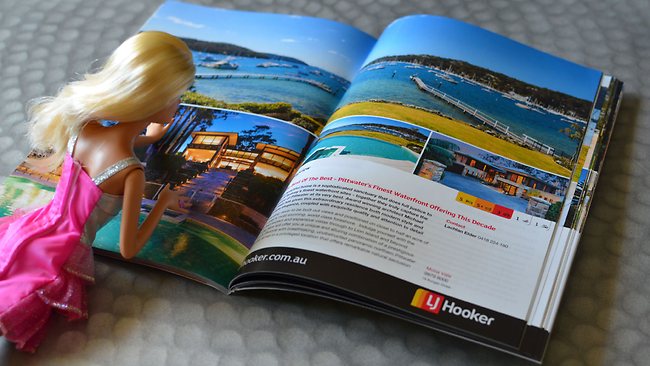
LJ Hooker is following in the footsteps of fast food, toy and clothing giants, planting the seeds of brand recognition in very young children.

The company makes no secret that its educational app and dedicated kids website, launched this week, are designed to encourage kids to become future LJ Hooker clients.

Georg Chmiel, LJ Hooker CEO, describes the digital pitch to kids, predominantly aged from four to nine, as an industry first and a clever initiative to raise brand awareness.

“LJ Hooker is successfully building a positive relationship with the next generation of Australian real estate tenants, buyers and sellers,” Mr Chmiel said.

The app and website’s central character Mr Hooker bear – LJ Hooker’s international mascot – could hardly fail to attract kids. He frequents community events throughout Australia, has his own range of merchandise, and Mr Hooker Bear’s suit is available for school hire.

Since it’s launch almost 2500 have signed up for the app, Mr Hooker Bear’s Letter Pop, which is designed to entertain kids, freeing up parents’ time.

“Children attending open for inspections and marketing appraisals are often bored and cranky, now they can have fun with an element of practical learning,” Mr Chmiel said.

“It’s almost like catching two fish with one rod, the app and site address the distraction element with modern technology to keep kids engaged while at the same time building brand awareness in a nice way.”

The app is available for free.

LJ Hooker said it began cultivating brand recongnition in children with the Next Barbie Dream Home campaign last month.

368693-barbie

Marketing experts say brand loyalties can be established as early as age two, and by the time children head off to school, most can recognise hundreds of brand logos.

Digital technology is one of the most desirable marketing mediums to target children as it is part of youth culture, and parents generally do not understand the extent to which kids are being advertised to online.

How Malcolm Turnbull Helped Pump Howard’s House Price Bubble

23 May

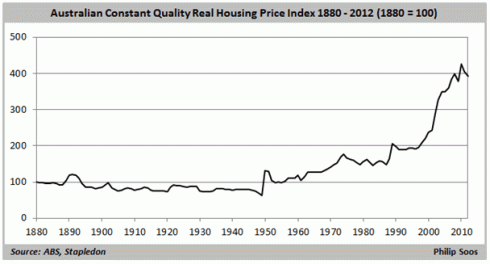
ScreenHunter_68-Feb.-13-07.23

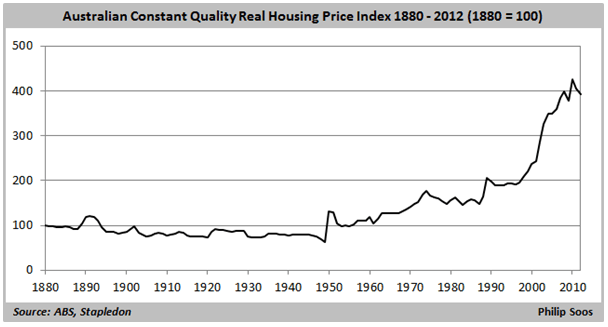
“…it makes no sense whatsoever for the average Australian family to have to tie up over two-thirds of all their wealth in the world in one highly illiquid and very risky asset: viz., the owner-occupied residence.

…we find that one in four families lose money (in real terms) when they come to sell the roof over their heads. For roughly one in ten dwellers, the situation is even more dire – these poor souls are subject to real price declines in excess of 13.4 percent.”

– Summary of Findings for The Prime Ministerial Task Force on Home Ownership, 2003

Australian economics and political forums are full of good-hearted, well-meaning types, who argue passionately, and often cogently, for the need for policy changes to enable lower house prices. Criticism of the Howard Government’s economic policies that encouraged rampant housing speculation and private debt growth is common with these folks.

Something I find particularly interesting to observe, is just how many of them are also given to lauding the Member for Wentworth — otherwise known as the “Member for Goldman Sachs” — as somehow representing all they aspire for in a national leader.

Apparently, the Australian economy would be magically transformed, our society would heal and “progress”, the national average IQ would rise, reality TV audience share would fall, spelling errors in news captions would cease, and childrens’ severed limbs would grow back, if only the brilliant, eloquent, self-made millionaire, and socially “progressive” Malcolm Turnbull were our PM. Or at the very least, the Treasurer.

These folks need to do their homework.

Let us take a journey ten years back in time, to the year 2003, and the Menzies Research Centre’s “Summary of Findings for The Prime Ministerial Task Force on Home Ownership” (pdf here).

It was chaired by Malcolm Turnbull – the former chairman, managing director, and partner of Goldman Sachs Australia, and co-owner (with Neville Wran and Nicholas Whitlam) of merchant bank, Turnbull & Partners. Which he sold to … Goldman Sachs.

Reading this summary report should, all by itself, be enough to convince any honest, open-minded person who (a) remembers the GFC, and (b) wants to see lower Australian house prices, that Malcolm Turnbull is hardly the wonderful, objective, unbiased, clear-thinking, far-sighted, vested-interest-free political saviour that so many gullibles imagine him to be.

First, let us consider the identity of the principal author of the report for the Howard government’s Home Ownership Task Force.

Christopher Joye. Arguably Australia’s most prominent housing “investment” spruiker.

Next, let us take a look at the list of “Institutional” professionals who are acknowledged on page 7-8 of the report (my bold added):

We would to like to recognize a number of individuals, categorized according to profession: –

Institutional: Rob Adams (First State Investments), Dan Andrews (RBA), Andrew Barger (Housing Industry Association), David Bell (Australian Bankers Association), Laura Bennett (Turnbull & Partners), Neil Bird (Urban Pacific), Mark Bouris (Wizard Home Loans), Angus Boyd (Foxtel), Jason Briant (The Menzies Research Centre), Kieran Brush (RAMS), Jasmine Burgess (JP Morgan), Alexander Calvo (RBA), Louis Christopher (Australian Property Monitors), Tim Church (JB Were), Bob Cooper (Tobari Management), Tracy Conlan (CBA), Lorenzo Crepaldi (Ebsworth & Ebsworth), Peter Crone (Prime Minister’s Office), Brendan Crotty (Australand), Margaret Doman (Cambridge Consulting), Tony Davis (Aussie Home Loans), Bob Day (Home Australia), Craig Drummond (JB Were), John Edwards (Residex), Lucy Ellis (RBA), Alex Erskine (Erskinomics), Jason Falinski (IAG), Arash Farhadieh (Phillips Fox), Guy Farrands (Macquarie Bank), Lyndell Fraser (CBA), Wayne Gersbach (Housing Industry Association), Steven Girdis (Macquarie Bank), Adam Gordon (Baltimore Partnership), Samuel Gullotta (Goldstream Capital), Michael Gurney (ABS), Jason Falinski (IAG), Martin Harris (First State Investments), Nick Hossack (Australian Bankers Association), Chris Johnson (NSW Government Architect), Alan Jones (2GB), Sally Jope (Brotherhood of St Laurence), PD Jonson (HenryThornton.com), Anatoly Kirievsky (RBA), Caroline Lemezina (Housing Industry Association), Steven Mackay (Ebsworth & Ebsworth), Angelo Malizis (Wizard Home Loans), Patrick Mangan (HomeStart Finance), Geordie Manolas (Goldman Sachs), Ramin Marzbani (ACNielsen.consult), Patrick McClure (Mission Australia), Gina McColl (BRW), Bill McConnell (AFR), Robert McCormack (Allens Arthur Robinson), John McFarlane (ANZ), Bruce McWilliam (Channel Seven), Robert McCuaig (Colliers Jardine), Peter McMahon (Clayton Utz), Alison Miller (Urban Development Institute of Australia), David Moloney (Booz Allen & Hamilton), Ruth Morschel (Housing Industry Association), Paul Murnane (JB Were), Darren Olney Fraser (Australian Public Trustees), Rod Owen (ABS), John Perrin (Prime Minister’s Office), Daniel Pillemer (Goldman Sachs), Dr Michael Plumb (RBA), Dr Steven Posner (Goldman Sachs), Brian Salter (Clayton Utz), Eloise Scotford (High Court of Australia), Tony Scotford (Ebsworth & Ebsworth), Nick Selvaratnam (Goldman Sachs), Tony Shannon (Australian Property Monitors), Matthew Sherwood (ING), Tim Sims (Pacific Equity Partners), Dr Tom Skinner (Redbrick Partners), Arthur Sinodinos (Prime Minister’s Office), Orysia Spinner (RAMS), Bryan Stevens (Real Estate Institute of Australia), Gary Storkey (HomeStart Finance), Arvid Streimann (UBS), Louise Sylvan (Australian Consumers Association), John Symond (Aussie Home Loans), Scott Taylor (ACNielsen.consult), Simon Tennent (Housing Industry Association), Lucy Turnbull (City of Sydney), Nicholas van der Ploeg (Turnbull & Partners), Peter Verwer (Property Council of Australia), Nick Vrondas (JB Were), Colin Whybourne (Resimac), Charles Weiser (RAMS), and Simon Winston Smith (JP Morgan).

Finally, let us consider carefully just a few pages of this Summary report. Doing so should enable thoughtful readers to gain a very clear insight into the kind of Orwellian doublespeak, the guile and cunning, the all-pervasive casuistry, that was and is employed by the Merchants of Debt and their cronies, in seeking to rationalise financial innovation, supposedly as a means to help would-be homeowners “benefit from a lower cost of home ownership”.

How? By making it easier for them to get into debt, via financing a portion of the total cost of their home through “equity investment”. In other words, a “financial innovation” enabling a transfer of some of the “equity” (ownership) in even more Australian homes, to speculators, through the genius of “investment” bankers.

Hopefully, a careful examination of this report may also enlighten some readers as to where our politico-bankster-housing nexus has its roots.

To set the tone of all that is to come, here is a snippet from chairman Turnbull’s preface to the 2003 Home Ownership Task Force summary report (my bold added):

No part of the Australian dream is more instinctively human than the desire to own our own home. In recent years, however, that worthy ambition has become harder for many Australians to attain. This is not a function of high interest rates; they are at record lows, but rather is due to a combination of other factors including escalating property prices and, so we contend, inflexibilities in housing finance which limit its availability.

So, the basic premise of this report, according to Malcolm himself, was this: Difficulties in obtaining the dream of home ownership are due to limited availability of housing finance + escalating property prices. Ergo, removing the “inflexibilities” in housing finance will take away those limits to its availability, and make the dream more attainable. Riiiiiiiiight.

And now, to the Summary report itself (my bold added):

Page 12

For centuries now, businesses in need of funds have been able to avail themselves of both debt and equity. Yet for households who aspire to expand, mortgage finance has been their one and only option. And so, despite the ever-growing sophistication of corporate capital markets, consumers around the world are forced to use only the crudest of financial instruments.3

3 This begs the question as to the absence of equity finance in the first instance. One answer instantly offers itself: securitisation. In the past, it was not practicable for a single unsponsored entity to go around gobbling up interests in individual properties in the vain hope that they could bundle these contracts into something that would look like a regulated holding. Fortunately, there has been spectacular progress of late in terms of the ability of private sector participants to package otherwise illiquid instruments into marketable securities.

Do you see what they did there? “Sophistication” = good. “Crude” = bad.

Oh dear, those poor, poor consumers; “forced” to use “only the crudest of financial instruments”. Despite “spectacular progress” in “securitisation”. Oh the humanity!!

Apparently the author — like all Merchants of Debt — does not ascribe to Leonardo Da Vinci’s maxim: Simplicity is the ultimate sophistication.”

Page 13

Spurred on by economic and social ructions of this kind, the State and Federal Governments sought to actively expand the supply of housing finance, and by the mid 1930s mortgage markets had arrived in Australia. Without widespread support for these changes, it is doubtful whether they would have materialized at such great pace. Ironically enough, it was bureaucratic inertia of precisely the opposite ilk that was to stifle the growth of trading in mortgage-backed securities some fifty years later. Thankfully, reason prevailed, and today it is hard to imagine what life would be like without alternative lenders and the pressures they exert on the banks.

Thank God! “Reason prevailed”, and we finally got … “trading in mortgage-backed securities”. Hallelujah and praise the Lord!

In this report, we renew our call for constituents to take the next brave step along the evolutionary housing finance path. It is our belief that there is no longer any need for the household sector to be the poorer cousin of financial markets. That is to say, aspirants should be able to access a suite of debt and equity instruments that is no less rich than that which corporations avail themselves of every day.

Wow! “The next brave step along the evolutionary housing finance path”. How could any responsible, modern politician even think of resisting this natural, evolutionary progression? How awful, how immoral would it be, to deny the household sector the opportunity to no longer be “the poorer cousin of financial markets”?

In what follows, we undertake four main tasks. First, we offer evidence that irresistible economic logic motivates the introduction of ‘equity finance’. Second, we tender a vast array of new information, drawn from, among other things, survey and focus group data, on the profound socio-economic benefits that these markets could deliver. Third, we demonstrate the proposal’s institutional viability, and pinpoint relatively minor adjustments to the legal, fiscal and regulatory structures that would be required in order to guarantee its success. In the fourth and final section of the report, we embark on a detailed appraisal of the ‘supply-side’ in the context of the debate about the rising costs of housing in this country. Just as we contend that it is vital to extend ownership opportunities to as many Australian families as possible, we also think it is critical to remove artificial constraints on the supply of low-cost properties.

All hail, ladies and gentlemen! We have our first oxymoron of the Summary report.

“Irresistable economic logic”.

Snigger.

Oh yes, about that “institutional viability”. That would be Newspeak for, “All the institutional Merchants of Debt featured in the acknowledgements list love my proposed financial innovation … so it’s clearly viable”.

Page 14

The report itself consists of four distinct ‘parts’. Parts One and Two take up the challenge of introducing the economic rationale underpinning our desire to eliminate the ‘indivisibility’ of the housing asset (which, in layperson’s terms, simply means allowing individuals to hold less than 100 percent of the equity in their home).

On the demand side, we conclude that there should be immense interest in securitized pools of enhanced home equity contracts, so much so that it is unlikely that there will be sufficient funds to sate institutional requirements. In fact, our tests indicate that this new asset-category could come to dominate the ‘optimal’ investor portfolio, with conservative participants dedicating at least 20 percent of all their capital to ‘augmented’ housing.

Page 15

Finally, might a liquid secondary market enable other forms of risk sharing and spawn the development of derivative and futures contracts on residential real estate?

Of course! “Other forms of risk sharing”, the development of “derivatives and futures contracts on residential real estate”, that’s sure to be a win-win for everyone, right?

Oh, wait … remind me again, what happened in 2008?

Page 21

It would appear that the prevailing legal and regulatory framework can flex to accommodate the introduction of equity finance. Most exciting though is the revelation that we can fashion these arrangements as either equity or hybrid debt instruments. The latter is an especially attractive alternative since it enables one to circumvent all of the legal and psychological complications implicit in ‘co-ownership’. In particular, under the debt option, occupiers always own 100 percent of the home in which they live. Furthermore, the costs borne by the institution are noticeably reduced (to take but one example, stamp duty is no longer relevant). In this sense, we can have our economic cake, and eat it too!

Yes, sure, just a little bit of “flex” in the legal and regulatory framework. That’s all. Just enough to “circumvent all of the legal and psychological complications”, and so “accommodate the introduction” of my financial innovation.

So where are the much mooted impediments to progress? In the immortal words of George Harrison, “Let me tell you how it will be, there’s one for you, nineteen for me.” Our study of the proposal’s institutional feasibility suggests that over-zealous regulatory authorities have the capacity to tax away the gains from trade. Here it is not so much the imposition of new levies, but rather the rigid interpretation of existing ones.8 This was certainly the case with several small-scale efforts to launch equity-based products overseas. Yet what would make these actions especially perverse is that markets of this type present the Federal Government with unprecedented revenue raising possibilities. That is to say, the advent of equity finance would permit the Commonwealth to tax owner-occupied housing for the very first time. Naturally, these charges would only apply to the investor’s holding. In this vein, we would submit that even the most ruthless of bureaucrats should be incentivized to encourage the promulgation of these products.

Do you see the cunning carrot bribe being offered by the Merchants of Debt here?

“Hey Mr Howard, if you let us have our financial innovations, and clamp down on any ‘over-zealous regulatory authorities’ who might get in the way of our plan, then VOILA! you can introduce more taxes!”

Page 22

Irrespective of what is decided in the post-publication period, we are convinced that the application of both debt and equity finance will eventually become standard industry practice. It is more a matter of whether that day will arrive in the near term or in the far-flung future; and that, truth be known, is a question that only you (i.e., consumers, decision-makers, investors and opinion-shapers) can answer.

Unsurprisingly, it is our belief that Australia is well positioned to push the intellectual envelope and become the very first nation to develop primary and secondary markets in real estate equity. And at $2.5 trillion, that is no small cheese.

You see? It’s that natural, “evolutionary housing finance path”. It is inevitable, like the rising of the sun. So you best get on board now, and give us what we want; we are going to get it anyway, someday, whether you like it or not, so why not enjoy the ego-stroking (and votes) that will come with being a policy leader in “the very first nation” to “push the intellectual envelope”?

Page 24

Readers will become familiar with our argument that it makes no sense whatsoever for the average Australian family to have to tie up over two-thirds of all their wealth in the world in one highly illiquid and very risky asset: viz., the owner-occupied residence. Indeed, in Part Two of the report we find that one in four families lose money (in real terms) when they come to sell the roof over their heads. For roughly one in ten dwellers, the situation is even more dire – these poor souls are subject to real price declines in excess of 13.4 percent! In this context, it is high time that we brought capitalism to the home front and provided all Australians with the option of issuing both debt and equity capital when purchasing their properties.

Bringing “capitalism to the home front”. Now that’s got to be a great idea! Why? Because it makes no sense whatsoever to tie up over two-thirds of all your wealth in one “highly illiquid and very risky asset”.

Er … hang on. If the owner-occupied residence is such a “highly illiquid and very risky asset”, then tell us again why would it would be such a great idea to “securitise” a portion of the “equity” in that “highly illiquid and very risky asset”, and sell it to speculators as an “investment”?

It should be plainly obvious to any thinking reader, that the entire Home Ownership Task Force report in 2003 was little more than sales pitch by the Merchants of Debt –

We have had some expenses for assistance with research, computing services and the like and we have therefore been fortunate in receiving generous and much appreciated support both financial and in kind from a number of organisations, including Wizard Home Loans, the Housing Industry Association, JBWere, Booz Allen & Hamilton, Aussie Home Loans, Resimac, RAMS Home Loans, HomeStart Finance, Clayton Utz, Ebsworth & Ebsworth, Phillips Fox, ACNielsen.consult, and Home Australia.

Screen shot 2013-05-22 at 10.14.07 PM

A sales pitch to the Howard Government, to allow financial innovation in the Australian housing sector. Innovation of the kind that brought us the Global Financial Crisis.

With folks like Goldman Sachs, the Turnbull & Partners merchant bank, and Malcolm Turnbull’s former Goldman Sachs Australia associate, Christopher Joye, leading the bankster cheer squad.

And with Task Force chair and then head of the Menzies Research Centre, Malcolm Turnbull, endorsing it all with his usual eloquence –

The Menzies Research Centre, while affiliated with the Liberal Party, is neither an echo chamber for Government policies nor a substitute for the public service. Our aim is to promote independent, creative and practical ideas on subjects of public importance. Our political perspective is simply that of a commitment to individualism, enterprise and freedom of choice.

We recognise that the most challenging social issues are not susceptible to quick ideological answers. We need constantly to promote new approaches and new ideas in social policy as much as we do in science or technology. We believe that these reports do deliver a wide range of new ideas, many of them worked out in considerable, groundbreaking analytical detail.

The principal author of that report, Christopher Joye, has since gone on to introduce his Equity Finance Mortgage product, and the leading housing spruiker / real estate investment / funds management firm, Rismark International.  He is also a director of Yellow Brick Road (YBR) Funds Management, a company founded by another Merchant of Debt who just happened to feature very prominently in the acknowledgements list of the Howard Government report — Mark Bouris, formerly of Wizard Home Loans.

It was Christopher Joye who told readers of his column two years ago, that “The big fella once said to me, You capitalise on chaos.”

He was speaking of his former Goldman Sachs associate, Malcolm Turnbull.

If lower house prices is something that you want to see in this country, then Malcolm Turnbull MP is not your friend and saviour.

* See also Compassion For Malcolm: He Just Wants His Balls Back

“$35 Million A Day” Usury-On-Debt: Sloppy Joe Hockey Finally Gets It Right

22 May

Congratulations Joe Hockey!

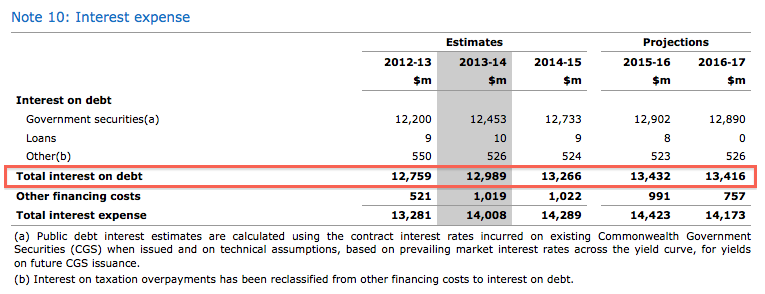
At long last, in his budget reply speech at the Press Club today, “Sloppy Joe” finally got around to correctly stating the cost to taxpayers of Usury (interest) on the Federal Government debt:

Screen shot 2013-05-14 at 7.50.25 PM

Though he still chose to use the lowest of those budget forecast numbers – the $12.759 billion for the current financial year, ending June 30.

All the forecast numbers for the years “going forward” .. are higher.

Try about $36.7 million a day Joe.

Or, be even more accurate, by taking the “Total interest expense” figure, which includes (projected) “other financing costs”.

The total usury expense is forecast (!!) to be more like $39 million a day.

“Something Is Wrong And Everybody Who Is Not Paid To Say Otherwise Knows It”

22 May

The estimable David Llewellyn-Smith (aka Houses and Holes) of macrobusiness.com.au has coined The Truth Statement of the Year in summarising the latest consumer sentiment survey results:

Consumer sentiment crashes

It seems a little bit of reality goes along way in Australia with the May consumer sentiment number crashing in the wake of the Federal Budget, down 7%. The full release is worth a read:

[click here for macrobusiness.com.au article]

So, despite 200bps of rate cuts and ceaseless prattle about it being all good from all quarters, the fiscal instability canary has reminded the kids once again that Australia is not not what it used to be.

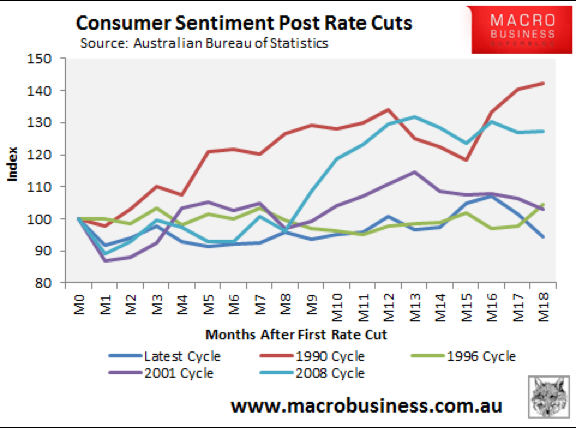
In fact, sentiment has crashed out of its uptrend and is now well below where it was when the rate cuts began:

Screen shot 2013-05-22 at 12.23.56 PM

And versus the average of previous cycles, is very sick indeed:

Screen shot 2013-05-22 at 12.24.41 PM

Something is wrong and everybody who is not paid to say otherwise knows it.

Indeed.

“I Call It Stealing” – Pensioner Shock At Bank Savings Grab

22 May

From the Herald Sun (h/t reader Richo):

 Adrian Duffy emerged from a quintuple heart bypass only to find his wife's $20,000 Suncorp account empty because the bank gave it to the government. PIC: David Kelly Source: The Courier-Mail

Adrian Duffy emerged from a quintuple heart bypass only to find his wife’s $20,000 Suncorp account empty because the bank gave it to the government. PIC: David Kelly Source: The Courier-Mail

A QUEENSLAND pensioner emerged from a quintuple heart bypass only to find his bank had emptied his account, handing more than $22,000 to the Federal Government.

Legislative changes rushed through Parliament late last year mean money can now be identified as “unclaimed” after an account has been inactive for more than three years, instead of seven years.

Banks have already begun searching for inactive accounts that fit the new definition and transferring the cash to the Australian Securities and Investments Commission, as required. ASIC then passes the money to the Commonwealth of Australia Consolidated Revenue Fund.

This scheme is not dissimilar to the government’s new Small Business Superannuation Clearing House system. A (for now) optional system, news of which was broken right here on BiR*, where employers are now being “encouraged” to send all their employees’ SGC Superannuation payments, along with their company BAS payments, direct to the A.T.O., and not direct to the employees’ super fund. In effect, the government is trying to use employers, and now ASIC, to do its dirty work; enabling the government to earn extra usury by diverting millions / billions in citizens’ superannuation via the ATO, on the way (hopefully) to their super fund; or, in the case of “unclaimed” bank accounts, using the banks to steal citizens’ money outright.

The Australian Bankers’ Association has accused the Government of putting its “own financial circumstances” ahead of customers’ needs, leaving them facing “months of delays trying to reclaim their own money”.

Er … the ABA would say these things, wouldn’t they; the banks can hardly be thrilled at having the government confiscate those “unclaimed” bank savings, four years earlier than was their previous practice. I wonder how much in the way of additional earnings (usury) the banks expect to lose out on as a result of the government’s greed overriding their own?

ASIC says the money can be claimed “at any time by the rightful owner”, but banks have pointed out the process can take as long as six weeks.

Toowong resident Adrian Duffy is now looking at a lengthy battle to have his savings restored.

The 75-year-old spent 21 days in hospital following quintuple heart bypass surgery and a second operation in April.

When he and his wife, 57-year-old Mary-Jane, went to check their Suncorp account, they discovered their balance had plummeted from $22,616 to zero. A note on the May 1 entry read: “Closing WDL Govt unclaimed monies.”

The couple had saved for 14 years in preparation for major health-related costs.

Suncorp claims a letter was sent at the end of March notifying the account – held in Mrs Duffy’s name – had been inactive for more than three years and would be closed if no action was taken.

It says attempts were made to call the couple on April 16, followed by an “account closed” letter on April 30.

Mr and Mrs Duffy are adamant they received no warnings of the closure of the account.

“I called it stealing,” Mr Duffy said.

“My understanding of the definition of stealing is to take something without somebody’s knowledge and not tell them. As far as I’m concerned, that’s exactly what happened – (the Government) took it without telling us.”

The couple are working to recover the money, but say they were lucky to have other savings.

“If we didn’t have the money elsewhere, we would now have to be paying for cardiologists, visits to surgeons, ECGs, x-rays, whatever is involved in the follow up,” he said.

“We would have to find money to pay them, because those people aren’t going to say to you, ‘we’ll wait six weeks’.”

While many people believe they have until May 31 to act on their dormant accounts, banks in fact must finalise their lodgements by that date.

A Treasury spokesman said the reforms were designed to “help reunite Australians with their lost money sooner, and protect them from being eroded by fees, charges and inflation”.

Oh?

To “help” “reunite” Australians with their “lost” money sooner?

So, that is what this “reform” is really all about.

Hello George Orwell.

As I have warned for years, look around the globe at what governments have been doing in other nations since 2008, and expect ever more of these kinds of creeping, sneaky government schemes. All designed to steal your money, under the smokescreen of “reform”, or “helping” someone.

* See also: It Has Begun – Labor Steals Liberal’s Idea To Steal Your Super

Turning A Human Being Into This…

21 May
The Matrix: Pod-grown

The Matrix: Pod-grown

From the Daily Mail UK:

New spectre of cloned babies: Scientists create embryos in lab that ‘could grow to full term’

The prospect of cloned babies has moved a step closer after scientists extracted stem cells from human embryos created in a laboratory.

The breakthrough could lead to customised cells to help treat and even cure a range of diseases, from Alzheimer’s to multiple sclerosis.

However, it also raises the spectre of babies being cloned in laboratories

While human embryos have been cloned before, none have had healthy stem cells extracted from them. The latest advance means scientists are now even closer to being able to clone children.

The US team behind the work stress that they want to find treatments for incurable diseases – but critics fear there is little to stop a rogue scientist from copying their work to try to clone humans.

Dr David King, founder of the campaign group Human Genetics Alert, called for an international ban on human cloning and said it was ‘irresponsible in the extreme’ to have published details of the stem-cell technique.

The world first was achieved at Oregon Health and Science University, with a technique similar to the one used to clone Dolly the sheep…

Josephine Quintavalle, of campaign group Comment on Reproductive Ethics, questioned the need for the research, given that another, more simple way of making customised stem cells already exists.

She said: ‘The suspicion has to be that the real interest is not stem cell therapy per se, given that other uncontroversial approaches are already so successful. Let’s hope that the goal is not out and out reproductive cloning.’ …

…Dr King warned: ‘Scientists have finally delivered the baby that would-be human cloners have been waiting for: a method for reliably creating cloned human embryos.

‘This makes it imperative that we create an international ban on human cloning before any more research like this takes place.

‘It is irresponsible in the extreme to have published this research.’

From the Age:

Pope Francis has denounced the global financial system, blasting the “cult of money” that he says is tyrannising the poor and turning humans into expendable consumer goods.

More correctly, the debt-at-usury “money” system — the 500 year rise of which can largely be blamed directly on failings of the ‘Church’ — turns human beings into milking cows.

Debt slaves.

Human cattle.

To be grown in number. Herded. Kept docile.

And milked, throughout their working lives.

Or — to use The Matrix’ parable — the usurious “money” system turns human beings into batteries.

To be slowly, steadily drained of their energy; used as fuel, for The Machines.

Once you understand what “makes the world go ’round” … and more importantly, how, and why … these latest scientific “developments” come as no surprise.

See also:

Imagine A World With No Banks

Underdog Barnaby Closing In On Windsor

21 May

From the Northern Leader:

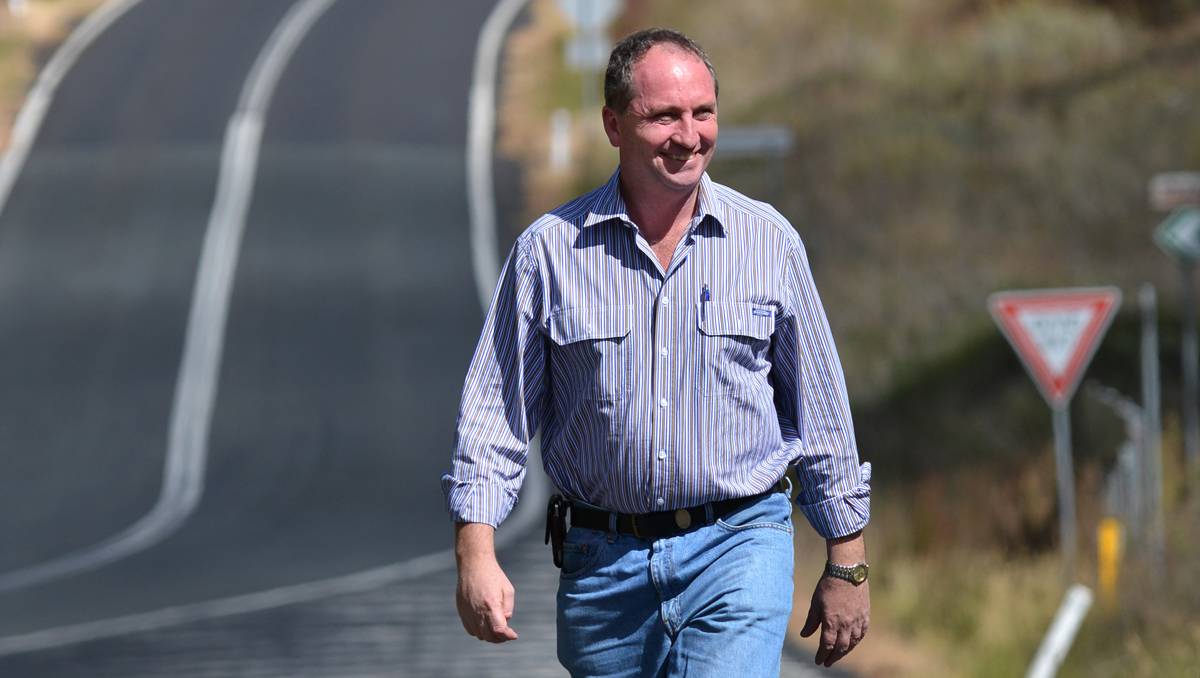
HITTING THE ROAD: Nationals candidate for New England Barnaby Joyce has forums in 29 towns and villages over the next three weeks. SOURCE: The Northern Daily Leader

HITTING THE ROAD: Nationals candidate for New England Barnaby Joyce has forums in 29 towns and villages over the next three weeks. SOURCE: The Northern Daily Leader

NEW England Nationals candidate Barnaby Joyce accepts he’s the underdog but he doesn’t think he’s as far behind sitting MP Tony Windsor as the latest poll suggests.

It was no surprise he was the underdog, Senator Joyce said, but he disputes just what the voters might read into the latest poll.

“I went into this fight behind … but I’m closing in,” he forecast as he prepared to tackle a six-week whistle-stop talking tour of the electorate.

He questioned the results of a poll published in The Leader yesterday from its sister publication, The Australian Financial Review, that indicated the independent MP held a 10-point lead over The Nationals deputy leader.

Senator Joyce said he believed he was much closer than what the poll showed – ranking Mr Windsor with 49 per cent of the primary vote against Senator Joyce’s 38 per cent.

He didn’t doubt the numbers but he did question the transparency of the motives behind the poll – who did it, what questions were asked, what the sample size was, and the demographic split.

“I would question whether it’s a reflection of the electorate, the way the questions were asked to determine the outcome,” he said.

The story reported that the polling was done by the resources industry to gauge how real were the concerns about coal seam gas, water and coal mining – and according to the results the resources issues ranked way below priorities like jobs and employment, the economy, cost of living and health and education issues.

Senator Joyce predicts those issues will be among the questions raised in his electorate forums, which begin at Mullaley tomorrow with an afternoon appearance in the Mullaley hall.

From there he will take a swing through the far flung reaches of an electorate that is nearly 60,000 square kilometres in size and extends nearly 400km from south of Nundle to the Queensland border and is about 280km wide.

There are about 56 towns, villages and localities – and Senator Joyce has 29 of them in his sights for stopovers.

“I want to get to all the corners, the little towns that get forgotten, like Ebor,” he said.

Mr Windsor has held the seat of New England since 2001 with a margin of 21.52 per cent – the 10th safest seat in the parliament.

But this time around Senator Joyce believes that while he’s behind, he’s not too far behind and certainly not 10 percentage points.

He thinks there’s a huge 30 per cent of undecided voters out there going inside the four months before the election.

How they decide to vote will be crucial to his chances of toppling Mr Windsor and he muses that while Tony Windsor’s campaign might be based on his loyalty and his length of service to his electorate, his premise is for the future, and a place close to the centre of the action in a future government.

He also expects to get an inkling of the feelings of supporters and the great undecided when he hits the forum track tomorrow.

He expects some torrid, tough questions.

How The Media Uncritically Enables The Growth Of Super(annuation) Parasites

19 May

I fear there are no words to adequately express my contempt for the so-called “journalists” in our mainstream media.

So I won’t even try.

See for yourself, dear reader, whether my headline is apt, or no.

Here is Sid Maher & Joe Kelly of The Australian (my bold added):

Levy hike deferral ‘to cost $55bn’

INDUSTRY super funds have warned that Tony Abbott’s planned two-year delay in increasing the superannuation guarantee will cost workers a combined $55 billion in lost retirement earnings over seven years.

The warning from the Industry Super Network came as business groups split over the Opposition Leader’s budget reply speech…

[…seven paragraphs of diversionary bullsh!t posing as “reporting”…]

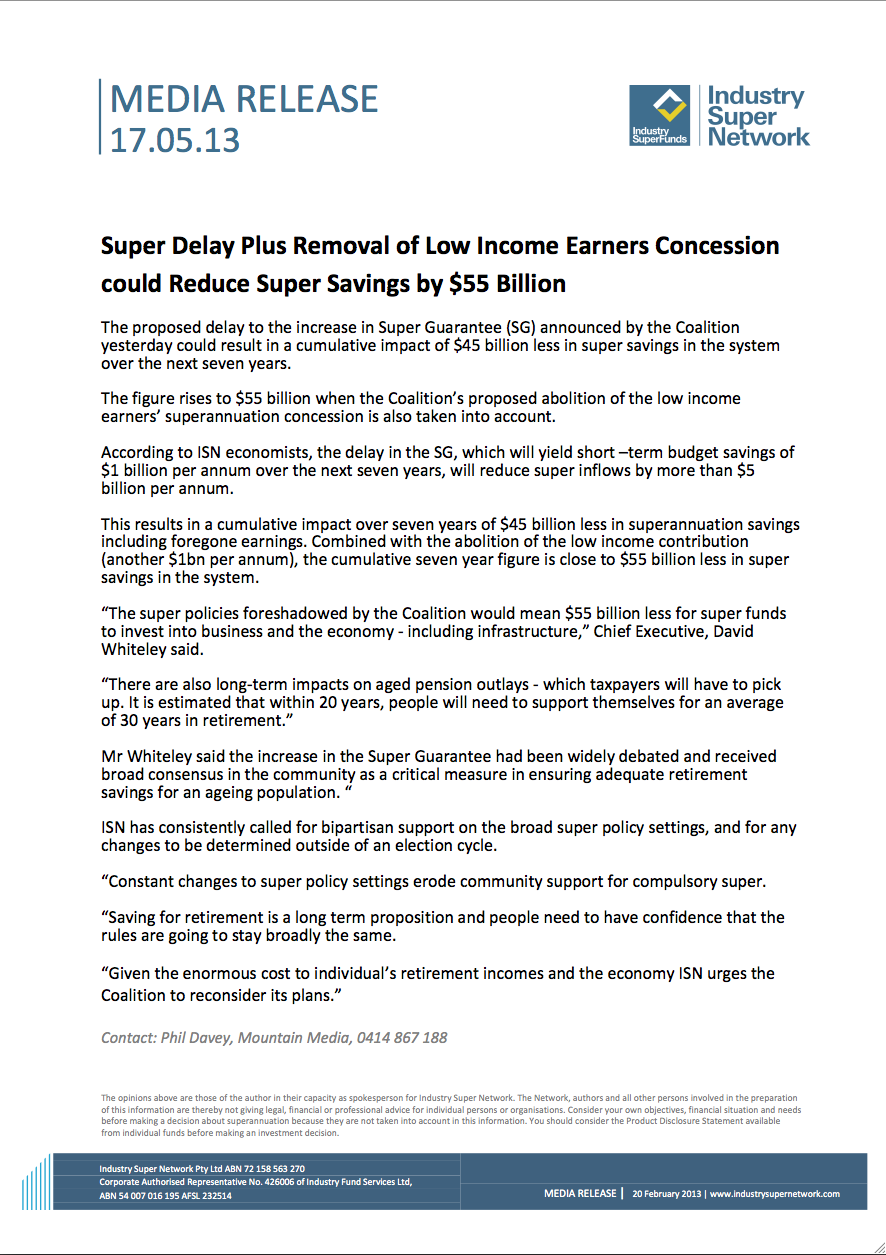
Industry Super Network chief executive David Whiteley said the proposed delay in the compulsory increase would result in a cumulative impact of $45bn less in super savings in the system over the next seven years.

“The figure rises to $55bn when the Coalition’s proposed abolition of the low-income earners’ superannuation concession is also taken into account,” he said.

ISN economists had estimated the delay would yield short-term budget savings of $1bn per annum over the next seven years but reduce super inflows by more than $5bn per annum.

Er… Sid? Joe? Hello … anyone home?!

How exactly did the Industry Super Network come up with those figures that you have reported parrotted from their press release, oh so authoritatively?

Click to enlarge

Click to enlarge

Did the ISN show you their modelling?  Their assumptions?  Their raw source data?

Did you not see a big red flag waving when you read their press release (er.. you did read it, right?), claiming that the decision would “reduce super inflows by more than $5bn per annum”?

Did it not occur to you that these folks make their “living” from the fees they plunder off those “super inflows”?

Is it at all possible that the “economists” of the ISN are little more than completely full of sh!t, rent-seeking societal parasites,  who have concocted some very convenient, nice-big-round-multiples-of-five numbers ($55bn, $45bn, $5bn) — forecasts, no less — for no other reason than to pressure Coalition politicians into changing policy, hoping to ensure that they do receive their long barracked for, extra super “inflows” / income stream?

“Given the enormous cost to [our much-anticipated income stream boost] … ISN urges the Coalition to reconsider its plans.”

Oh yes, one last question.

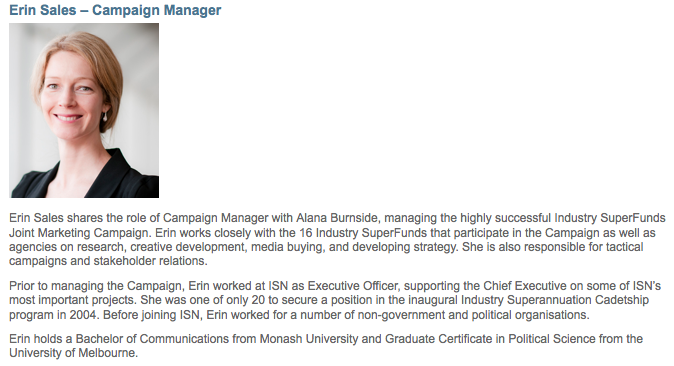
Where (and when) did the ISN’s blonde Campaign Manager last take you boys out to lunch?

Screen shot 2013-05-19 at 5.36.26 PM

Ship Of State Wrecked On The Rocks Of Usury

19 May

Shipwreck-Arbutus-near-the-Dry-Tortugas-National-Park

The waters were always crystal clear. The rocks below, easy to discern. We even had a map to guide us.

We simply failed to keep watch.

And allowed treasure-hunters to reinterpret our map.

Roger Fenton (1565-1615) was a Fellow of Pembroke Hall, Cambridge University, rector of St Stephen’s in London, and one of the translators of the 1611 King James Bible. He declared that “Not until sixteen hundred years after Christ did interest find any defenders.” The following excerpt* is from his “Treatise On Usury” (London, 1612, pp. 2-3; 48-49); my bold emphasis added:

“…many Christians of reformed Churches being urged to flee persecution, and to convert their goods into money, yet lacking skill to employ the same in a strange country; tender hearts thought it a pity that usury in such a case were not lawful; and nimble wits began to search, if the matter might not be so handled, and qualified by cautions and limitations, that some such thing as we call usury might be practiced. For such is the subtlety of Satan, that if he cannot hinder the growth of good corn, yet tares shall grow up with it. He thought that when men were so busied about the reforming of those gross abuses of superstition; that then was the only time to begin a new seed-plot of usury, of sacrilege, of liberty and profaneness in the other extreme. Which vices, howsoever they were little feared or thought upon in those days; yet by our time we may easily perceive to what ripeness they have grown, which then were but as seeds under the ground…

“He that turns himself into an angel of light can set so fair a gloss upon a work of darkness, that the iniquity of it will hardly be discerned. He can so cunningly twist good and evil together, that the appearance of usury shall be presented without a show of injustice.

“…the gain of usury is a sweet gain, without labor, without cost, without peril… it is so pleasant and profitable a sin. This advantage then has the devil gotten against us in the practice of this sin; that usury being a trade so gainful in respect to others; so easy, so cheap, so secure without all labor… being also so common… it has bewitched even the consciences of those who are most tender in other matters…

“As usury is a sin in itself… so it is branded by the Holy Ghost for a sin of that nature and degree which does make shipwreck of conscience: the continuation of which sin cannot stand with the grace and favor of God.

“…Let some of those tender consciences who are so urgent to call for warrant out of the book of God for every ceremony and form in the Church, seek a warrant for this their practice (of usury), which so nearly concerns them, and let them seek it at the oracle of God, who has not left it, as he has many other things, to the discretion of the Church, or wisdom of the Commonwealths; but has vouchsafed to determine it in his own book to our hands: to set down an express law against it in Exodus; to renew that law again and again in Leviticus and Deuteronomy; to ratify and confirm it with no other words than he himself used at the publishing of the whole moral law…

“Since it has pleased Almighty God thus fully and exactly to express his will for our resolution in this point; let us not be ready to flee from his express word to human interventions — I mean those devised distinctions which favor the service of Mammon more than the service of God; which favor the things that be of men, to wit, the profit, the ease, the security, the sweet gain of interest; a trade which flesh and blood must needs affect and be greatly inclined unto.”

See also “Money Has To Serve, Not Rule!” – Pope Francis Is Right

* Source: Usury In Christendom: The Mortal Sin That Was, and Now Is Not, Michael Hoffman (2013)

Design a site like this with WordPress.com
Get started