It’s The Usury, Stupid

25 Sep

Privacy2_610x426


From AAP, via nine.msn.com.au:

Debt costs outweigh WA future fund returns

A future fund designed to quarantine some of Western Australia’s mining royalties for future generations isn’t making enough cash to offset the state’s increased cost of borrowing, the premier says.

The fund was the centrepiece of the 2012/13 budget and is being established with more than $1 billion in seed capital over four years, mainly using money from the Royalties for Regions fund.

While it’s forecast to grow to $4.7 billion within 20 years, opposition treasury spokesman Ben Wyatt has cast doubt on whether it will even make a return.

Mr Wyatt says it is actually being funded by borrowings, which are used for investments, and then placed in a marginally interest-bearing account.

But the cost of debt had gone up with the state losing its AAA credit rating, so the fund was losing money, he said.

Liberal leader Colin Barnett conceded the fund wasn’t making enough to counter higher borrowing costs, but said the loans were for capital works projects.

We pay a little bit more on what we borrow compared to what we receive from the future fund,” Mr Barnett told Fairfax radio.

The problem is not debt.

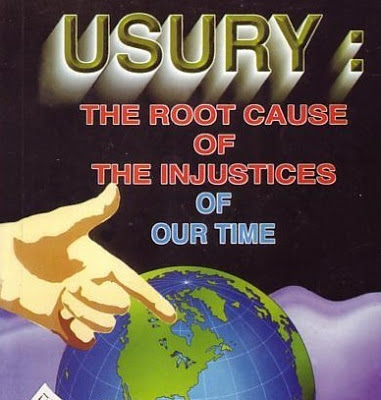
The Problem is Usury.

Humanity will never escape ongoing financial crises, or the din of “debate” about money and debt, until we turn the clock back 500 years, and ban usury in all forms once again.

Danke Schön Climate Change

25 Sep

I loved Ferris Bueller’s Day Off. This version of ‘Danke Schön’ is much better:

The IPCC’s Fifth Assessment Report is due to be released on September 30th.

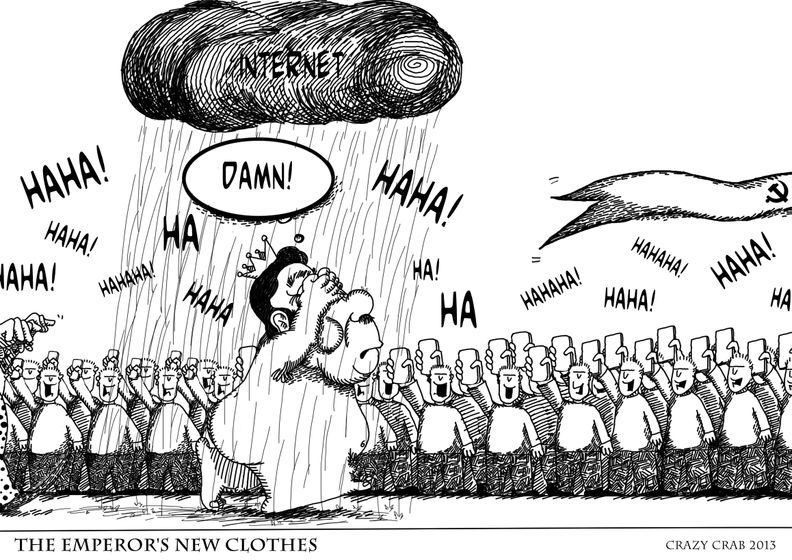
Alas, once they start laughing at you, you’re through.

djjUapbZSHaZDaFRqTcsLg

OECD: Australia Needs $76 Carbon Price To Meet Emissions Target

25 Sep

Holy Man Jam, Boulder, CO  Aug. 1970

From The Australian:

MYSTERIOUSLY, once the election was over, an OECD report with a Treasury official’s input emerged indicating the carbon tax would need to be 10 times the EU rate and twice the $38-per-tonne level posited by Treasury to allow Australia to meet its 5 per cent carbon reduction goal…

The OECD report indicates that unless the developing world also implemented a carbon tax, Australia would see considerable de-industrialisation, moderated only by a retreat into an illegal protectionist regime. And the competitive pressures would further intensify if, as appears likely, Japan, the US and other OECD countries also reject a carbon tax.

This is contrary to the official Treasury line that we need a price on carbon now, that the longer we wait the more painful the transition and that the costs will be trivial. Treasury secretary Martin Parkinson would have known of the report’s findings months ago.

And there we have it.

Treasury knew full well what the true ramifications of our political leaders’ commitment to “emissions reduction” would be. They just weren’t willing to tell us.

Unless the rest of the developing world (China, India, etc) follows our the 2010 Green-Labor alliance’s lead in implementing a carbon tax — which they aren’t — then in trying to meet the 5% emissions reduction target, Australia faces “considerable de-industrialisation”.

The devastating effects of which could only be moderated by … wait for it … protectionist policies.

Which are “illegal”; a reneging on “free trade” agreements, designed by international bankers and multinational monoliths, and happily signed up to by our former leaders, on both “sides”.

Protecting the interests of your own nation’s people is a really terrible and evil thing … according to the “free trade” globalists.

Being “open for business”, and willing to further expose your nation’s people to the predations of that 0.01% who wish to own (thus, rule) the whole world through debt … that is what makes you a “leader” worthy of international acclaim.

Is The King Tide Of “Seeming” Receding?

23 Sep

I do not agree with many of the views espoused by Herald Sun columnist, blogger, and Channel 10 TV host Andrew Bolt.

I do, however, most wholeheartedly agree with his views on what he has — brilliantly — described as “The Age of Seeming”:


Whenever the general topic of pretentious preening and posturing by those who care more about “seeming” than “doing” arises, I often recall Bolt’s column of December 2nd, 2009.

This, dear reader, is in my opinion one of the best op-eds I’ve ever read.

Period.

In particular, though,  it is one of the best op-eds I’ve ever read that so brilliantly skewers the zeitgeist of our times.

Consider whether anything has changed since Bolt penned these words, nearly four years ago:

The Age of Seeming

THE AIDS ribbons were the first red flag of this Age of Seeming – this great explosion of public sanctimony.

For a long while, no celebrity dared turn up at a big do without wearing that loop of red ribbon to show they cared.

Was a single AIDS patient actually saved by this flaunting of compassion?

Don’t be silly. These ribbons were for advertising the wearer’s good heart, not the sufferer’s weeping sores.

It was weird the way they suddenly vanished. Do edicts on the cause-du-jour get published in Vanity Fair, so the fashionable don’t risk turning up to an event caring about the wrong thing?

How mortifying if Cate Blanchett was the only one in a room of red AIDS ribbons to be wearing the brown ribbon of Irritable Bowel Syndrome.

But if red ribbons vanished, this new virus of “consciousness raising” stayed, mutating into ever more offensively reproachful forms.

Only last week, I watched Prime Minister Kevin Rudd and the now deposed opposition leader, Malcolm Turnbull, boast they’d taken the following oath, which they urged all other men to swear, too:

I swear: never to commit violence against women, never to excuse violence against women, and never to remain silent about violence against women. This is my oath.

Pardon? Were Rudd and Turnbull saying it was this oath that now stopped them from belting their wives?

Of course not.

Was their oath likely to be sworn by the kind of men that would?

As if.

Were they telling me to swear it, too, because they think I’d otherwise punch a woman?

How dare they.

So what was all that really about?

Rudd’s smug face told the story. Here was another preening ritual of seeming good without achieving it, while making even the innocent feel accused.

Creepy, yes, but how many such Seeming Ceremonies we’ve had. There was last year’s apology to the “stolen generations” that no one can actually find, and now a sorry to the “Forgotten Australians” for having been removed from lousy parents for their own safety.

What on earth did such sorries achieve? That’s not saying sorry. That’s just blaming someone else (and the wrong people, too), while gloating over your far finer moral feeling.

It’s a seeming contrition, with none of the searing regret of a real one.

But on these Seeming Ceremonies went. They’d dance at Make Poverty History concerts that didn’t raise any money; they’d acknowledge traditional owners whose descendants weren’t present; they’d stage naked protests against fur that attracted only the sticky-handed; and they’d catch jets to signings of accords that only pretended to cut the gases they’d just belched.

Once you had to show your goodness by doing something practical, like slogging through malarial swamps to build a health clinic in a jungle.

Now you do it by jogging with mates to “raise awareness” – which means asking someone else to do the real work.

Maybe the next ribbon should be yellow, so the Seemers can raise awareness of the Doers who have got the rough end of this moral pineapple.

It pleased me greatly this afternoon to see from the above video, that Bolt is continuing to try and bring this topic of “seeming” into the public consciousness.

Perhaps, just perhaps, we may someday as a result begin to witness the king tide of “seeming” receding.


5 Years After The Financial Crisis, The Big Banks Are Still Committing Massive Crimes

22 Sep

usury

Cross-posted from Zero Hedge:

Preface: Not all banks are criminal enterprises. The wrongdoing of a particular bank cannot be attributed to other banks without proof. But – as documented below – many of the biggest banks have engaged in unimaginably bad behavior.

You Won’t Believe What They’ve Done …

Here are just some of the improprieties by big banks over the last century (you’ll see that many shenanigans are continuing today):

  • Engaging in mafia-style big-rigging fraud against local governments. See this, this and this
  • Shaving money off of virtually every pension transaction they handled over the course of decades, stealing collectively billions of dollars from pensions worldwide. Details here, here, here, here, here, here, here, here, here, here, here and here
  • Pledging the same mortgage multiple times to different buyers. See this, this, this, this and this. This would be like selling your car, and collecting money from 10 different buyers for the same car
  • Committing massive fraud in an $800 trillion dollar market which effects everything from mortgages, student loans, small business loans and city financing
  • Pushing investments which they knew were terrible, and then betting against the same investments to make money for themselves. See this, this, this, this and this
  • Engaging in unlawful “Wash Trades” to manipulate asset prices. See this, this and this
  • Participating in various Ponzi schemes. See this, this and this
  • Bribing and bullying ratings agencies to inflate ratings on their risky investments

The executives of the big banks invariably pretend that the hanky-panky was only committed by a couple of low-level rogue employees. But studies show that most of the fraud is committed by management.

Indeed, one of the world’s top fraud experts – professor of law and economics, and former senior S&L regulator Bill Black – says that most financial fraud is “control fraud”, where the people who own the banks are the ones who implement systemic fraud. See this, this and this.

Even the bank with the reputation as being the “best managed bank” in the U.S., JP Morgan, has engaged in massive fraud. For example, the Senate’s Permanent Subcommittee on Investigations released a report today quoting an examiner at the Office of Comptroller of the Currency – JPMorgan’s regulator – saying he felt the bank had “lied to” and “deceived” the agency over the question of whether the bank had mismarked its books to hide the extent of losses. And Joshua Rosner – noted bond analyst, and Managing Director at independent research consultancy Graham Fisher & Co – notes that JP Morgan had many similar anti money laundering laws violations as HSBC, failed to segregate accounts a la MF Global, and paid almost 12% of its 2009-12 net income on regulatory and legal settlements.

But at least the big banks do good things for society, like loaning money to Main Street, right?

Actually:

  • The big banks have slashed lending since they were bailed out by taxpayers … while smaller banks have increased lending. See this, this and this

Indeed, top experts say that fraud caused the Great Depression and the 2008 crisis, and that failing to rein in fraud is dooming our economy.

We can almost understand why Thomas Jefferson warned:

And I sincerely believe, with you, that banking establishments are more dangerous than standing armies ….

John Adams said:

Banks have done more injury to religion, morality, tranquillity, prosperity, and even wealth of the nation than they have done or ever will do good.

And Lord Acton argued:

The issue which has swept down the centuries and which will have to be fought sooner or later is the people versus the banks.

No wonder a stunning list of prominent economists, financial experts and bankers say we need to break up the big banks.

Clive’s Away!!!

21 Sep

homer rides the bomb

Good news, from the Brisbane Times:

Mining giant Clive Palmer has narrowly won the seat of Fairfax by just 36 votes, in a knife-edge result destined for a recount.

At 2.30pm, the Australian Electoral Commission finished its count, announcing Mr Palmer had won the seat by three dozen votes, after clawing back from an earlier margin of just 22 votes.

If the margin of votes at the completion of the distribution of preferences is less than 100, a recount will be automatically triggered. The Australian Electoral Commission will waste no time, beginning its recount on Monday.

”There will be a full distribution of preferences which is a fresh count in any case,” AEC spokesman Phil Diak said…

Mr Palmer is overseas and on Thursday tweeted that he had been having tests of a ”Titanic II” model conducted at a facility in Germany.

But he has already indicated that he would demand a recount whatever the result, accusing authorities of ”tampering” with ballots earlier in the week.

IPCC Final Draft Admits Models Have Failed

21 Sep

Doomed-To-Repeat-History

Cross-posted from The Australian (my bold and underline added):

Consensus distorts the climate picture

IN February 2007, publication of the Intergovernmental Panel on Climate Change’s Fourth Assessment Report (AR4) was received with international acclaim.

The vaunted IPCC process — multitudes of experts from more than 100 countries examining thousands of refereed journal publications, with hundreds of expert reviewers, across a period of four years — elevated the authority of the IPCC report to near biblical heights. Journalists jumped on board and even the oil and energy companies neared capitulation.

The veneration culminated with the Nobel Peace Prize, which the IPCC was awarded jointly with former US vice-president Al Gore. At the time, I joined the consensus in supporting this document as authoritative; I was convinced by the rigours of the process. Although I didn’t agree with some statements in the document and had nagging concerns about the treatment of uncertainty, I bought into the meme of: “Don’t trust what one scientist says; trust the consensus-building process of the IPCC experts.”

[TBI: Clearly then, humankind — and science in particular — has learned nothing from history, and the examples of Galileo, Copernicus, and Nicolas Steno.]

Six-and-a-half years later, nominally a week before the release of the IPCC Fifth Assessment Report (AR5), substantial criticisms are being made of leaked versions of the report as well as of the IPCC process. IPCC insiders are bemoaning their loss of scientific and political influence. What happened to precipitate this change?

The IPCC was seriously tarnished by the unauthorised release of emails from the University of East Anglia in November 2009 that became known as the Climategate affair. These emails revealed the “sausage-making” involved in the IPCC’s consensus-building process, including denial of data access to individuals who wanted to audit its data processing and scientific results, interference in the peer-review process to minimise the influence of sceptical criticisms and manipulation of the media.

Climategate was soon followed by the identification of an egregious error involving the melting of Himalayan glaciers. These revelations were made much worse by the response of the IPCC to these issues. Then came concerns about the behaviour of the IPCC’s chairman Rajendra Pachauri and investigations of the infiltration of green advocacy groups into the IPCC. All of this was occurring against a background of explicit advocacy and activism by IPCC leaders related to carbon dioxide mitigation policies.

[TBI: In other words, publicly barracking for the financial sector’s “market-based” “carbon pricing” “solutions” — see The Financialization of Nature.]

Although the scientists and institutions involved in Climategate were cleared of charges of scientific misconduct, the scientists and the IPCC did not seem to understand the cumulative impact of these events on the loss of trust in climate scientists and the IPCC process.

The IPCC’s consensus-building process relies heavily on expert judgment; if the public and the policymakers no longer trust these particular experts, then we can expect a very different dynamic to be in play with regards to the reception of the AR5 relative to the release of the AR4 in 2007.

THERE is another, more vexing dilemma facing the IPCC, however. Since the publication of the AR4, nature has thrown the IPCC a curveball: there has been no significant increase in global average surface temperature for the past 15-plus years. This has been referred to as a pause or hiatus in global warming.

Almost all climate scientists agree on the physics of the infrared emission of the CO2 molecule and understand that if all other things remain equal, more CO2 in the atmosphere will have a warming effect on the planet. Further, almost all agree that the planet has warmed across the past century and that humans have had some impact on the climate.

But understanding the causes of recent climate change and predicting future change is far from a straightforward endeavour.

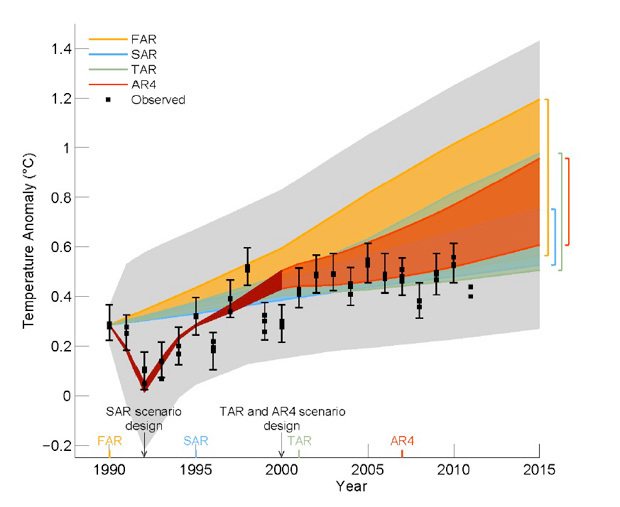
The heart of the debate surrounding the IPCC’s AR5 is summarised by the graphic on this page that compares climate model projections of global average surface temperature anomalies against observations.

The above graphic is Figure 1.4 from Chapter 1 of a draft of the Fifth Assessment Report from the Intergovernmental Panel on Climate Change. The initials at the top represent the First Assessment Report (FAR) in 1990, the Second (SAR) in 1995. Shaded banks show range of predictions from each of the four climate models used for all four reports since 1990. That last report, AR4, was issued in 2007. Model runs after 1992 were tuned to track temporary cooling due to the 1991 Mount Pinatubo eruption in The Philippines. The black squares, show with uncertainty bars, measure the observed average surface temperatures over the same interval. The range of model runs is syndicated by the vertical bars. The light grey area above and below is not part of the model prediction range. The final version of the new IPCC report, AR5, will be issued later this month.

This diagram is Figure 1.4 from the first chapter of an AR5 draft. FAR denotes the First Assessment Report (1990), SAR the second (1995) and TAR the third (2001), which was followed by the AR4 (2007). It is seen that climate models have significantly over-predicted the warming effect of CO2 since 1990, a period during which CO2 concentrations increased from 335 parts per million to more than 400ppm.

The most recent climate model simulations used in the AR5 indicate that the warming stagnation since 1998 is no longer consistent with model projections even at the 2 per cent confidence level. Based on early drafts of the AR5, the IPCC seemed prepared to dismiss the pause as irrelevant noise associated with natural variability. Apparently the IPCC has been under pressure from reviewers and its policymaker constituency to address the pause specifically.

Here is the relevant text from the leaked final draft of the AR5 summary for policymakers:

“Models do not generally reproduce the observed reduction in surface warming trend over the last 10-15 years.

“The observed reduction in warming trend over the period 1998-2012 as compared to the period 1951-2012 is due in roughly equal measure to a cooling contribution from internal variability and a reduced trend in radiative forcing (medium confidence).

“The reduced trend in radiative forcing is primarily due to volcanic eruptions and the downward phase of the current solar cycle. However, there is low confidence in quantifying the role of changes in radiative forcing in causing this reduced warming trend. There is medium confidence that this difference between models and observations is to a substantial degree caused by unpredictable climate variability, with possible contributions from inadequacies in the solar, volcanic and aerosol forcings used by the models and, in some models, from too strong a response to increasing greenhouse-gas forcing.”

The IPCC acknowledges the pause and admits climate models do not reproduce the pause. I infer from these statements that the IPCC has failed to convincingly explain the pause in terms of external radiative forcing from greenhouse gases, aerosols, solar or volcanic forcing; this leaves natural internal variability as the predominant candidate to explain the pause.

Natural internal variability is associated with chaotic interactions between the atmosphere and ocean. The most familiar mode of natural internal variability is El Nino/La Nina. On longer multi-decadal time scales, there is a network of atmospheric and oceanic circulation regimes, including the Atlantic Multidecadal Oscillation and the Pacific Decadal Oscillation.

The IPCC refers to this as “unpredictable climate variability” in its statement above.

My chain of reasoning leads me to conclude that the IPCC’s estimates of the sensitivity of climate to greenhouse gas forcing are too high, raising serious questions about the confidence we can place in the IPCC’s attribution of warming in the last quarter of the 20th century primarily to greenhouse gases, and also its projections of future warming. If the IPCC attributes the pause to natural internal variability, then this prompts the question as to what extent the warming between 1975 and 2000 can also be explained by natural internal variability.

Nevertheless, the IPCC concludes in the final AR5 draft of the summary for policymakers: “There is very high confidence that climate models reproduce the observed large-scale patterns and multi-decadal trends in surface temperature, especially since the mid-20th century.

“It is extremely likely that human influence on climate caused more than half of the observed increase in global average surface temperature from 1951-2010.

“Continued emissions of greenhouse gases would cause further warming. Emissions at or above current rates would induce changes in all components in the climate system, some of which would very likely be unprecedented in hundreds to thousands of years.”

WHY is my reasoning about the implications of the pause, in terms of attribution of the late 20th-century warming and implications for future warming, so different from the conclusions drawn by the IPCC? The disagreement arises from different assessments of the value and importance of particular classes of evidence as well as disagreement about the appropriate logical framework for linking and assessing the evidence. My reasoning is weighted heavily in favour of observational evidence and understanding of natural internal variability of the climate system, whereas the IPCC’s reasoning is weighted heavily in favour of climate model simulations and external forcing of climate change.

I do not expect my interpretation and analysis to be given credence above the IPCC consensus. Rather, I am arguing that the complexity of the problem, acknowledged uncertainties and suspected areas of ignorance indicate several different plausible interpretations of the evidence. Hence ascribing a high confidence level to either of these interpretations is not justified by the available evidence and our present understanding.

How to reason about uncertainties in the complex climate system and its computer simulations is neither simple nor obvious. Biases can abound when reasoning and making judgments about such a complex system, through excessive reliance on a particular piece of evidence, the presence of cognitive biases in heuristics, failure to account for indeterminacy and ignorance, and logical fallacies and errors including circular reasoning.

The politicisation of climate science is another source of bias, including explicit policy advocacy by some IPCC scientists. Further, the consensus-building process can be a source of bias. A strongly held prior belief can skew the total evidence that is available subsequently in a direction that is favourable to itself. The consensus-building process has been found to act generally in the direction of understating the uncertainty associated with a given outcome. Group decisions can be dominated by a single confident member.

Once the IPCC’s consensus claim was made, scientists involved in the IPCC process had reasons to consider the possible effect of their subsequent statements on their ability to defend the consensus claim, and the impact of their statements on policymaking.

The climate community has worked for more than 20 years to establish a scientific consensus on anthropogenic climate change. The IPCC consensus-building process played a useful role in the early synthesis of the scientific knowledge. However, the ongoing scientific consensus-seeking process has had the unintended consequence of oversimplifying the problem and its solution and hyper-politicising both, introducing biases into the science and related decision-making processes.

SCIENTISTS do not need to be consensual to be authoritative. Authority rests in the credibility of the arguments, which must include explicit reflection on uncertainties, ambiguities and areas of ignorance, and more openness for dissent. The role of scientists should not be to develop political will to act by hiding or simplifying the uncertainties, explicitly or implicitly, behind a negotiated consensus. I have recommended that the scientific consensus-seeking process be abandoned in favour of a more traditional review that presents arguments for and against, discusses the uncertainties, and speculates on the known and unknown unknowns. I think such a process would support scientific progress far better and be more useful for policymakers.

The growing implications of the messy wickedness of the climate-change problem are becoming increasingly apparent, highlighting the inadequacies of the “consensus to power” approach for decision-making on such complex issues.

Let’s abandon the scientific consensus-seeking approach in favour of open debate and discussion of a broad range of policy options that stimulate local and regional solutions to the multifaceted and interrelated issues surrounding climate change.

Judith Curry is a professor and chair of the school of earth and atmospheric sciences at the Georgia Institute of Technology in the US, and president of Climate Forecast Applications Network. She is proprietor of the blog Climate Etc.

judithcurry.com

Climate Scientists Told To “Cover Up” Warming Pause

20 Sep

From the Daily Mail (UK):

Scientists working on the most authoritative study on climate change were urged to cover up the fact that the world’s temperature hasn’t risen for the last 15 years, it is claimed.

A leaked copy of a United Nations report, compiled by hundreds of scientists, shows politicians in Belgium, Germany, Hungary and the United States raised concerns about the final draft.

Published next week, it is expected to address the fact that 1998 was the hottest year on record and world temperatures have not yet exceeded it, which scientists have so far struggled to explain.

The report is the result of six years’ work by UN’s Intergovernmental Panel on Climate Change (IPCC), which is seen as the world authority on the extent of climate change and what is causing it – on which governments including Britain’s base their green policies.

But leaked documents seen by the Associated Press, yesterday revealed deep concerns among politicians about a lack of global warming over the past few years…

The latest report, which runs to 2,000 pages, will be shown to representatives from all 195 governments next week at a meeting in Stockholm, who can discuss alterations they want to make.

But since it was issued to governments in June, they have raised hundreds of objections about the 20-page summary for policymakers, which sums up the findings of the scientists.

What it says will inform renewable energy policies and how much consumers and businesses will pay for them.

The report is expected to say the rate of warming between 1998 and 2012 was about half of the average rate since 1951 – and put this down to natural variations such as the El Nino and La Nina ocean cycles and the cooling effects of volcanoes…

The key to understanding the truth about the role played by the IPCC, is right there in the sentence bolded above.

It’s all about money, and propaganda.

The rationalisation of the financialisation of nature:

https://vimeo.com/43398910

Are These The Women They Want In Leadership Positions?

20 Sep

I have been scrupulously avoiding exposing myself to the degradation of mainstream “news” media of late. Yet despite my best efforts, I did hear tell that there has been something of a political storm in a tea cup brewed up by some, over the new Prime Minister’s appointing only one woman to a cabinet ministry position.

It seems there are many in our community, and particularly those who self-identify as socially and politically “progressive”, who fervently believe that there should be more women in positions of power and responsibility.

I remembered this, while working out at the gym yesterday.

For the first time, I had taken with me the ear plugs I wear while riding my motorcycle. My aim? To block out the soul-destroying, mind-numbing, monotonic noise of the music videos playing on the gym’s entertainment system. With that noise mostly gone, I was able to work out in relative quiet, and peace. And in that near silence, I could not help but notice instead the monotonic images flickering from the ubiquitous TV screens.

Here are just two of the many, thematically-identical music videos that I recall seeing yesterday. Watch both of them. Right through. Take careful note of how the main characters are clothed. Or not. Their physical behaviour. What the videographers repeatedly draw your attention to. And if, perchance, you still don’t “get” the common theme, consider also the lyrics:

https://vimeo.com/15806290

Lyrics – Rude Boy

Lyrics – Talk Like That

I do not see “free”, “liberated”, “empowered” females there.

I see debasement.

I see enslavement.

I see two souls. Two beautiful Beings. Whose bodies have been commodified. Used. To make money. For other people.

Alas, what I also see, are role models. For today’s young females.

Tomorrow’s adults … parents … and purported national leaders.

I cannot but wonder at the myopia of those who have selfishly sought to gain political (and/or self-assumed moral) advantage, by making a song and dance about there being only one woman — a “token”, they say — appointed to the new government’s inner cabinet.

Are these gender warriors really, truly concerned about “advancing the cause of women”?

If so, then perhaps we may, some day, witness their abandoning the weight of their double standards, and taking up arms with equal umbrage over the rampant sexploitation of females in music, in advertising, indeed, in just about all forms of modern mass “communication”.

We may even see them actively supporting, rather than viciously mocking — as is their wont — the likes of Melinda Tankard Reist.

Forgive me for saying so, dear reader.

But methinks the latterly-caricatured and ridiculed “home maker” female of generations past, likely enjoyed more dignity, respect, and freedom, than the 24/7 sexploited “working” female of the “liberated”, “progress-ive” present.

“None are so hopelessly enslaved, as those who falsely believe they are free. The truth has been kept from the depth of their minds by masters who rule them with lies. They feed them on falsehoods till wrong looks like right in their eyes.”

– Johann Wolfgang von Goethe

Design a site like this with WordPress.com
Get started