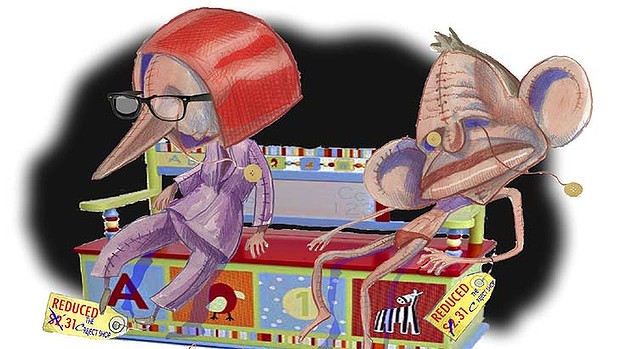
Gillard Plays The Philosophical Civil War Card

14 Jun

Barnaby Joyce writes for the Canberra Times:

Line crossed as Gillard cracks under election strain

It is the time when former senator Steve Fielding dressed up as a bottle, it is the time when former senator Len Harris dressed up as a knight in armour, it is the time when former Senator Andrew Bartlett went bungee jumping and it is the time when current Prime Minister Gillard gave a speech on blue ties and abortion.

It is less than 100 days to an election. This is a time when those behind get jumpy and desperately try anything to get a disengaged electorate to listen.

What is different this time is that it is not minor party leaders jumping for the spotlight, it is a sitting Prime Minister.

If the Prime Minister wants to play the philosophical civil war card, because the electorate and her own party have given up on her, then she will achieve nothing more than the disdain of the electorate at the end of her political career. To say that people were disgusted and gobsmacked by the pure unadulterated parochialism and naivety of this ploy is an understatement.

The vast majority in politics get furious when conscience issues are used for personal political appeal. When debate is called for on the sensitive issue of abortion, it is a conscience issue that both sides co-ordinate together on bipartisan approaches for either side of the debate.

There are very strict, but unwritten, rules of engagement and Ms Gillard broke the lot. Virtually all people have strong and indelible views on this, but how many have pulled this arrow from their quiver during this campaign? None but Ms Gillard.

The anarchy that has beset the nation is further illuminated by Mr Tony Windsor, who states that he will only work with Ms Gillard. One could be so bold to suggest that the nation might come first before personalities.

If Mr Windsor does pull the trigger, that is the end of the referendum into financial recognition of local government. Section 128 of the constitution requires that a law to amend the constitution be passed not less than two months before the referendum. On the current election timetable that law must be passed by June 25 because pre-polling opens on August 26.

Therefore, any election before September 7, in effect, would mean that this referendum would not occur. I thought the recognition of Local Government was part of the independent’s, so-called, “deal”.

As the government has basically ceased operating, it goes to show the good job the bureaucrats do as the wheels of service to the public continue. The issue is more with the private sector.

This nine-month Labor caravan of confusion, otherwise known as the 2013 election, has destroyed business confidence. As National Australia Bank chairman Michael Chaney pointed out on Tuesday, Labor’s decision to hold such a long election campaign has created a perfect storm of consumer pessimism and economic instability.

A lack of business confidence translates into a lack of investment, and an inability for the economy to change gears. As the mining boom tapers off, we need other sectors of the economy – like agriculture, construction and tourism – to pick up.

But no one is going to take the risks necessary to make this change with the “who knows what they’ll do next” crowd that we have in Canberra.

We need a fluid economy. Instead we have a deadlocked government. The general public has gone from not listening to the Prime Minister to disdain.

If you watch people’s faces at waiting rooms, there descends a set look and audible groans as Ms Gillard creates a parody of her office on the rolling news coverage.

We are a better nation than this. As John Howard used to point out there are many more things that unite us than divide us. We have been blessed to generally have leaders that have stressed consensus over division.

Bob Hawke was another example. Indeed, when Julia Gillard first became Prime Minister she claimed that she wanted to govern in the consensus style of Hawke. That’s just another promise that she has failed to keep.

It is disappointing that people, complete strangers, have no hesitation in offering free character assessments of the Prime Minister of Australia. It is not that they disagree with her beliefs, it is the way she keeps returning to the bank of public trust and discerning acumen and dragging it through the mud.

Water Is Political: Barnaby

13 Jun

Following is Barnaby Joyce’s keynote address to The Quest for Water Efficiency Conference, hosted by the Committee for Economic Development of Australia, Melbourne, 12 June 2013:

Keynote Address: Politics and Water Policy

You can’t understand water unless you understand politics. This is true the world over. The Chinese character for “politics” is derived from root words meaning flood control.

Water is political because it has all the elements that make politics real for people. It involves competing uses, trade-offs, it does not respect state or international boundaries and humankind has been engaged in a centuries-long battle to control water flows against the random destruction of nature.

All of those elements have been in place in Australia over the past decade, as we have swung from our worst drought to the most destructive floods in our history.

Today, I want to argue that while we have got many things right in this country, the politics of water has at times let Australia down in the management of its water resources.

It has become fashionable to talk about the “consumption” of water, mostly in reference to its over-consumption. Indeed, in the Murray-Darling irrigation is referred to as a “consumptive” use of water, in comparison to the environmental uses of water that are apparently more benign.

We use the word consume without thinking too hard about its relevance to water. Water is not like other products or commodities. Burning coal means there is less coal to use, refining oil brings us closer to peak oil but using water does not reduce the amount of water there is in the world.

We only have one allotment of water, and that was delivered to us 4.4 billion years ago. There is no more water being created or destroyed. As the author Charles Fishman has observed, every glass of water you drink has had a rich history, most likely it has been through the digestive systems of dinosaurs, other animals and perhaps other humans before arriving in your glass.

So water cannot be used or consumed, and it is misleading to prosecute rice growers, cotton farmers or urban gardeners as consuming too much. The problem with that analysis is that it implies that the use of water to grow rice in Deniliquin, takes water away from people being able to water their garden in Melbourne but that is not the case.

Like politics, all water policy, is local.

Pointing this out does not mean there is not water scarcity in some areas, or that there are not competing uses of water. But what is important is that the lessons and issues regarding water in one area cannot easily be translated to other areas.

Murray-Darling

The Murray-Darling debate is a perfect example of this. There is a too common view that the Murray-Darling is a system of interconnected garden hoses. There is a misconception that you just need to add water to fix the Murray-Darling’s problems and it doesn’t matter all that much where that water came from.

It was most evident in the controversy that engulfed Cubbie Station for many years. Queenslanders were blamed for the problems of the Lower Lakes. And the reverse was true too. The Lower Lakes were blamed for all of the problems of the Murray-Darling.

Cubbie is just 200 metres above sea level; it is more than 1500 kilometres from the mouth of the Murray. Water that travels from Cubbie to the Great Australian Bight must travel this entire flat distance over sun-drenched areas and thirsty plains. The CSIRO estimates that, in normal conditions, just 18 per cent of the water from the Balonne system, where Cubbie is located, makes its way to the mouth of the Murray.

It reached its zenith when the Adelaide Advertiser declared on its front page that the 2011 Brisbane floods had led to three years of water being wasted! The claim was that the floodwaters that had flowed into Moreton Bay could have been put into the Western Corridor pipeline, sent up the range to Toowoomba, put in the Condamine and magically meandered its way to South Australia.

Putting aside the laws of physics, the laws of irony were breached first. Here was an article arguing that water was being wasted because it was left to flow out to sea near Brisbane, when it could have been, at great cost, sent more than 2000 kilometres away, to … flow out to sea near Adelaide.

Such thinking has real policy outcomes too. It has led to some disastrously wasteful decisions on water recovery in the Murray-Darling. For instance, the government spent $23 million buying Toorale station, shutting down 4 per cent of Bourke’s economy and 10 per cent of Bourke’s rating base. Barely any of the water from Toorale has been delivered to the environment because an environmental assessment conducted after the purchase concluded that the water storages could not be removed without damaging the wildlife that rely on the artificial water storages to survive. As reported by The Australian, Toorale has effectively become Australia’s biggest and most expensive birdbath.

Like in the Toorale purchase, too often governments ignore the wider economic and social costs of their decisions. This should be no surprise. Governments are simply maximising their returns like anyone else would. So it should be no surprise that when water needs to be recovered they would choose the cheapest option available.

There are really two options to save water for the environment in the Murray-Darling.

First, we can buy the water back from licence holders, take the water out of production and return it to the environment. This option does reduce water use in rural Australia. It will reduce food production and mean fewer jobs and economic development in regional towns.

Second, we can invest in more efficient ways of using water, thus being able to return water to the environment without reducing the amount of food produced or regional economic activity.

Water buybacks are cheaper. They typically cost about $2000 per megalitre, whereas infrastructure investment can cost anywhere from $2000 to $5000 per megalitre.

So it should be no surprise that a cash-strapped government has gone for the cheaper option. So far Labor has invested just 10 per cent of the funds available for water infrastructure investment. In contrast, it has spent 70 per cent of the funds available to buyback water.

The Coalition believes that this approach is too skewed. Governments should be made to consider the wider economic and social impacts of their decisions. If society would like to take 2750 gigalitres of water out of agricultural production, then it should be willing to face up to the full social cost of that change, including the loss of jobs and regional development.

Requiring at least some of the water recovery to come through infrastructure investment makes governments face up to those costs.

That is why the Coalition has proposed capping water buybacks at 1500 gigalitres. The government has already recovered around 1250 gigalitres through water buybacks. That means that the maximum additional buyback that Murray-Darling communities would face would be an additional 250 gigalitres.

It should be noted that this is the government’s own water recovery strategy too. At the moment, they plan to get 1500 gigalitres of the required water through buybacks. It is just that the Labor Party, unlike the Coalition, will not commit to this target.

Last year, the Coalition tried to amend some of the legislation enabling the Basin Plan to insert this cap as a legally binding rule. The Government did not support us, and neither did the country independents, Tony Windsor and Rob Oakeshott.

We believe that a cap on buybacks will provide the 2.1 million people who live in the Murray-Darling Basin the certainty to get on and plan for their futures. While the threat of future water buybacks is there, that cannot happen.

We are constantly told that there are enormous opportunities for Australia to export food to the rising middle class. Given that the Murray-Darling produces 40 per cent of our agriculture, that area has to be part of any strategy to boost exports to Asia.

How will we take those opportunities though if we won’t give agricultural communities the certainty of how much water will be available for productive use? How much mining investment do you think we would attract if we said, we will sell you this tenement but we will decide annually how much coal you can export each year, and that amount may change depending on the political environment of the time?

This is especially so in water where many people have lost trust in this government to manage the $10 billion the Coalition put aside for the Murray-Darling in 2007. In 2011, a bi-partisan committee, chaired by Tony Windsor, concluded that:

The Committee heard of grave mistrust of this department across Basin communities resulting from the failure of the department to identify and respond to community concerns on a range of issues. In addition, this department has demonstrated a consistent failure to deliver water programs, including strategic water buyback, which is in the best interests of productive communities. This department should no longer be responsible for delivering these programs.

Remember that this comment was not a partisan one; it was signed off by Liberal, National, Labor and Independent members. It is often remarked that overseas investors have a more positive view of Australian agriculture than domestic investors. But if they can’t trust their own government, why would they invest?

Northern Australia and Dams

In my view the same blindness to economic and social impacts has contributed to the fact that Australia has not built a dam for more than 20 years. Bert Kelly once remarked that every time he heard funding for a dam announced, he could feel an election coming on. You could almost say the reverse now. Every time you hear a proposed dam being scrapped, you can feel an election coming on.

There are some good reasons why we are not building more dams in the more developed parts of Australia. For one, where we have developed the best dam sites have been taken. For instance, this was evident in the Queensland Government’s proposal to build a dam at Traveston on a geological fault line in an area that would have delivered a dam with an average depth of only around 5 metres. A more than $2 billion cost for a yield of only around 100 megalitres was not value for money.

But there have been some very poor reasons why we have not built dams.

Another reason we have not built dams is because we were told that it would not rain again thanks to climate change. Those predictions have been far off the mark, and a study the other day now claims that climate change will lead to more flooding in the Murray-Darling not less.

Another of those reasons is that we have not looked at the local costs and benefits of building dams. As I said above, all water issues are local issues. But we have been too ready to take the advice on dam building from other countries, or more developed areas of Australia, and apply them to the entire country; such as when areas of our country that are not as developed still have lots of potential for a variety of water supply options. No one option, be it dams or something else, should be pre-emptively vetoed.

That is why the Coalition established the Dams and Water Management Task Group that I am the Deputy Chair of. That group has travelled to every state and territory in the country looking at potential sites and investigating water supply options. A leak earlier this year suggested that the Coalition is going to build 100 dams but we are not about to let 100 flowers boom.

More than 100 potential dam sites have been suggested to us but only a fraction of these will ever be built or even considered. Some of the suggestions are just ideas, others are more substantial but have not been looked at since the days of Surveyor-Generals and Public Works departments. A lot more work will need to be done on most before a dam can be built. All the more reason we should start now.

Water is wealth and dams put water away when it rains to ensure that it is available in drier times. Dams throughout Australia help produce Australia’s food, support towns and communities, produce the majority of Australia’s renewable energy, act as an essential input to our manufacturing and mining industries and help mitigate the impacts of floods.

Australia experiences a highly variable rainfall climate and therefore the use of dams to moderate the impacts of this cycle are more important here than in most other countries. For example, Melbourne’s water supply system has 10 times the per capita storage volume of London’s water supply system for this very reason.

In 1980 Australian dams could hold enough water to supply Australia’s water needs for almost seven years. Today, our dams can hold enough water to store less than six years of water supplies. If no new dams are built, Australia’s storage capacity will fall to below four years’ of supply by 2050.

The Coalition will announce its response to the work of the Dams task group closer to the election but some early findings are clear.

Australia can make better use of its water resources. While Australia is the driest inhabited continent in the world, more water is available for use per person in Australia than in North America, Western Europe or Asia.

Australia uses just 6 per cent of its available water, compared to a world average of 9 per cent. Most of that water use goes to produce food and Australia produces enough food to feed 60 million people worldwide. If we increased our water use to equal the world average, Australia could feed almost 100 million people — even before accounting for any future increases in agricultural productivity.

But doing so will take the real vision to invest in our water resources to help the world deal with the future food task. The world population is set to grow by more than 2 billion people in the next half century. As a result, world cereal production will need to increase by three 3 tonnes a year and meat production would need to increase by 200 million tonnes per year.

Achieving any substantial increase in Australia’s agricultural production will need to involve investment in more irrigation. Irrigation generates 50 per cent of Australia’s agricultural profit from less than 2 per cent of our agricultural land. Irrigation produces food more efficiently and in doing so benefits the environment because more food is produced using less land.

That is not to ignore that too much water is used in some parts of Australia. As discussed earlier, over a number of decades, water has been over-allocated in the Murray-Darling, more than 40 per cent of the water available in the Murray-Darling is used for productive purposes and that will be reduced to 33 per cent after the implementation of the Basin Plan.

The level of water use in the Murray-Darling cannot be compared to undeveloped parts of Australia, and any attempt to do so is a gross distortion of the facts. For instance, just 5 per cent of our water resources in northern Australia are used, even though 60 per cent of Australia’s water falls there.

In the north of Australia there is significant potential for new water storages.

Those that are anti-development often claim that the soils in northern Australia are too poor, as if anywhere north and west of Brisbane must be a desert. This is simply incorrect. The CSIRO estimates that there is between 5 and 17 million hectares of arable soil in northern Australia. When the task group visited Go-Go Station in Western Australia, we were advised that there was 100,000 hectares of blacksoil on this property alone.

To put these figures in context, Australia only irrigates 2 million hectares across the entire nation.

The Ord is already expanding to more than double its area under irrigation, and future opportunities may lie in the West Kimberley as well, although these will be further away.

In the Northern Territory there are opportunities to expand the use of groundwater. The Northern Territory’s groundwater resources are poorly understood, and it would appear that the current approach errs on the side of caution because of this lack of knowledge.

Off-stream storage has real potential in the Gulf. The Queensland Government recently sold 80,000 megalitres of water in a tender that was over-subscribed in the Flinders catchment.

In north and central Queensland there are plenty of options some of which will be needed to provide more water to the coal industry.

Decisions on urban water

Most of these immediate water needs will be focused on water for agriculture or mining. The CSIRO estimates that most of our capital cities will not need further water supply augmentations for 10 to 15 years. Although there will be exceptions. Darwin’s population is rapidly growing and a response will probably be needed before then.

While that might seem some time off Australia needs to start planning for new water storages now. It can take 10 to 15 years for a dam to progress from concept to construction completion. We need to start planning for new water supply solutions today before it is too late.

The most recent drought put immense strain on Australia’s urban water resources. Dam levels in Sydney and Melbourne fell below 40 per cent, and below 20 per cent in Brisbane. Governments were forced to make rushed decisions to increase water supplies, and over $10 billion was invested in desalination plants to deliver 500 gigalitres of new water. It is partly because of these investments mean that Australia’s major cities have sufficient supply to meet demand for probably the next 15 years.

Yet it is clear now that mistakes were made. Too much was spent unnecessarily on desalination capacity. Only the desalination plants in Perth are being regularly used to supply water needs, while desalination plants in South-East Queensland, Sydney, Melbourne and Adelaide lie dormant at great cost to water consumers. Water prices have increased by 64 per cent since 2007.

These flawed decisions imposed higher water prices on consumers and potentially cheaper alternatives, such as dams, were ignored or given little consideration.

I don’t want to be too critical of those governments because those decisions were made under political pressure, and no government can afford for a major city to run out of water when facing a drought crisis.

The lesson for us though is a stitch in time saves nine. If we had done the preparation on what should be the future water supply options, then governments could readily evaluate a range of options, rather than jump for those that provided the quickest fix.

That is why the Coalition has committed all infrastructure investments of more than $100 million, that are supported by the Commonwealth, will require an analysis by Infrastructure Australia. That includes the investments that the Coalition will make in dams and other water infrastructure. That approach will be consistent with the National Water Initiative that the former Coalition Government put in place.

The Coalition will also ensure that we conduct feasibility studies now on future water supply options so that we are ready when our future water supplies dwindle. We will have more to say on that in our response to the Dams task group.

Conclusion

As a Senator I have been based in St George for almost eight years. St George is a town that is built on irrigation. A town of no more than 5000 in the district produces more than $500 million of cotton every year, around $200 million in grain and then melons, onions and other produce.

That is all there because we built a dam on the Balonne River and a weir downstream. The result has been a massive increase in productivity.

We are often told that Australia needs to do more to increase its productivity. Well, irrigation is a productivity booster. It turns water into “white gold”. Around 50 per cent of the value added in Australian agriculture comes from the 2 per cent of our land that is irrigated.

As a country we have come through the worst drought in our history. Rightly, much of our water policies over that time have focused on managing water shortages and conserving water for the environment.

But we must also recognise that water has more than just environmental uses. Our policies must be balanced to ensure that we protect the environment, develop our economy and sustain those towns and communities that rely on the use of water to survive.

That is why a Coalition Government will invest water efficiency not just buybacks, that is why a Coalition Government will build new dams to open up new areas of our country to agricultural and mining development and that is why a Coalition Government will start planning today to tackle the water shortages that will come in our future.

The Moment When Gillard Jumped The Shark

12 Jun

Conservative blogger Andrew Bolt has called it right – “Is this the most stupid, divisive and dishonest speech in Australian politics?”

Some very interesting comments — from those most un-likely — are quoted at that link. Worth a look.

Barnaby Mocks “Divine Word Of The Free Market Gospel”

6 Jun

Barnaby Joyce writes for the Canberra Times:

Jaunt through colourful past brings future into focus

Politics at the federal level has lost much of its lustre. The Labor Party are screaming at us through the nightly news that they are for the high jump. You can almost tell that they are past caring.

They do care about preselections in their dwindling number of safe seats, though. So there is a high degree of interest in whether Senator David Feeney the “faceless man” can become “Batman” (i.e. member of) after the retirement of Martin Ferguson. I suppose he will then be the “faceless batman”.

When the present situation in Australian politics gets you down, there is respite in our past.If you are a politics junkie then Tenterfield, in the northern New England, is a must. Tenterfield is the place where our continent was united, where our states joined to become one “indissoluble Federal Commonwealth”, in the words of the preamble to our Constitution.

We are the only island continent not burdened with the divisions and demarcations of national borders.

Tenterfield gets its name from the home in Scotland of the Donaldsons, Stuart Donaldson being a pioneer in the area and also the first premier of NSW.

Tenterfield was prepared as a battle site to defend Australia from invasion by Japan in World War II and tank traps can still be seen in the country nearby. Not to be parochial it was also the home of Robert Mackenzie, the third premier of Queensland. It was the last major railway station going north before the ultimate tariff, narrow-gauge railway lines, brought things to a grinding halt in Queensland. It was the home of Major James Thomas, who defended Breaker Morant, a seminal action in our history, Australia taking one of its first steps away from English oversight.

Dr Earl Page and John Hynes started the NSW Country Party in Tenterfield in around 1918, today Australia’s second-longest established party, after the Australian Labor Party.

Most noted of course is the 1889 federation debates held at the School of Arts on Tenterfield’s main street, and the paternal role that Sir Henry Parkes played in those debates. Edward Whereat withdrew from election for the NSW seat of Tenterfield to allow Sir Henry Parkes to make one of his many re-entries to Parliament. It is said that Parkes showed his gratitude by visiting Tenterfield perhaps twice during his tenure as the local member.

If politics drives someone in your party around the twist and they are searching for something lighter, well Peter Allen came from Tenterfield also.

Hanging in the School of Arts is the New England flag from the failed 1967 referendum to create a new state apart from NSW. The local member, until only very recently, was Richard Torbay. Even though he has resigned and been referred to ICAC, he was still polling at more than 50 per cent weeks out from a by-election he was not standing for.

To the west of Tenterfield is the derelict tobacco drying sheds, the casualty of a policy that says it is all right to kill yourself with smoking but you must do it with tobacco grown overseas. In town is one of Australia’s most successful hearse manufacturers, who are being killed by overseas tariffs.

The remainder of the world that excludes Australia lives in a pragmatic place away from the divine word of the free market gospel and premises their policies on bilateral arrangements of mutually negotiated benefit.

Drake to the east of Tenterfield used to have a timber industry which the Greens closed down. It once had a mining industry which the Greens don’t support, and it has a cattle industry which the Greens are trying to shut. Not surprisingly, the unemployment rate is through the roof. This is yet another iteration of current Australian politics.

The election that will be held in 100 days’ time will fundamentally be an election about the future, not the past, nor the present. Does Australia want a future where sensible government is returned to Canberra? Or will we continue to wallow in the morass of excessive promises, high debt and internal fascinations that have dominated federal politics for the last five years?

I think the Australian people have basically made their mind up on this question. The interest will turn to localised battles, where the margins for defeat are high, such as in New England.

In those seats, the people will ask themselves do they feel that the Labor Party, Ms Gillard and Mr Swan deserve endorsement of their current form of government? Or should they change to the alternative side, and most likely have a representative who is part of the solution to fixing their problems?

Love the sarcasm.

v Pravde net izvestiy, v Izvestiyakh net pravdy

5 Jun

Oh how I share these sentiments!

From Gary Gibson, editor of The Dollar Vigilante:

I feel like those who stayed in the Soviet Union right up until 1991… except that most Soviets actually knew their system was terrible. They had two governmental “news” outlets, the main Communist newspaper and the main Soviet newspaper, Pravda and Izvestia. Those names meant “the truth” and “the news” respectively… and a popular Russian saying was “v Pravde net izvestiy, v Izvestiyakh net pravdy” (In the Truth there is no news, and in the News there is no truth).

Here the local slaves still think the propaganda and drivel on CNN and other mainstream programming is actually both the truth and real news!

It’s a good thing I am still sitting in a bar and can drink the only government-approved intoxicating agent…even if it is the least effective and slowest of the various ways to make the world melt away. No wonder everyone here drinks so much!

It’s really looking like the final chapter of Atlas Shrugged with everyone clinging to centrally planned solutions even as those solutions accelerate economic collapse.

Growing Political Deception On Bank Deposits Theft

4 Jun

Truth-Lies

On All Fool’s Day 2013, this blog published the exposé — since cross-posted on globalresearch.ca — that G20 Governments All Agreed to Cyprus-Style Theft Of Bank Deposits In 2010.

It is telling to observe how politicians (and the media) worldwide are using the deceitful art of sophistry to obscure this truth.

As they all begin to pass the necessary legislation to enact what they have already agreed to — in secret, without providing clear and transparent advice to the public — they are seeking to subtly imply that these measures are needed as a result of what happened in Cyprus.

When the truth is, little Cyprus was just the first test case for implementing the Goldman Sachs-headed internationalist Financial Stability Board’s new bank “bail-in” regime, agreed to by all G20 Prime Ministers and Presidents nearly 3 years ago.

Ponder carefully the emphasised passage in the following Reuter’s news story:

EU draft bank rescue law would not shield big deposits

(Reuters) – A draft law that a group of European Union lawmakers voted for on Monday would shield small depositors from losing their savings in future bank rescues, but customers with more than 100,000 euros in savings when a bank failed could suffer losses.

A group of lawmakers in the European Parliament’s economics committee overwhelmingly voted that, from 2016, large depositors in the EU might suffer losses if a bank gets into serious trouble. The plan was similar to a deal in Cyprus, where wealthy depositors at two banks took hits to save the country from bankruptcy.

Under the EU proposal, a bank would dip into large deposits of over 100,000 euros once it had exhausted other avenues such as shareholders and bondholders. But deposits under 100,000 euros would be spared.

“The case in Cyprus showed how important it is to have clear procedures for making shareholders, bondholders and ultimately depositors foot the bill,” a press release from the committee said after the vote.

See what I mean? The Cyprus “bail-in” test case, deceitfully used as an example of why governments supposedly need to pass legislation for “similar” actions in their own countries … legislation that they already agreed to pass anyway, nearly 3 years ago.

EU finance ministers agreed last week that large, uninsured depositors should be subject to losses but some countries may still seek some flexibility on how they wind down their banks.

The “finance ministers” agreed, “last week”?

This is a deception.

As shown previously, the Prime Ministers and Presidents of the G20 nations all agreed to the policy framework laid down by the Financial Stability Board (FSB) at the Seoul G20 Summit, way back in 2010.

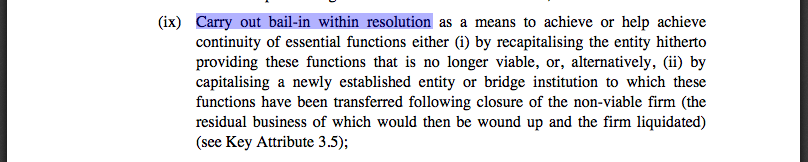
A framework that explicitly includes “bail-in” of banks, using the deposits (i.e, savings) of bank “creditors”:

“Carry out bail-in within resolution as a means to achieve or help achieve continuity of essential functions…”

Click to enlarge

Click to enlarge

There is something else that is very important to note.

The FSB, politicians, bankers, and bureaucrats all want you to believe that these new procedures might only place at some risk the savings of so-called “large” or “big” depositors.

This is untrue.

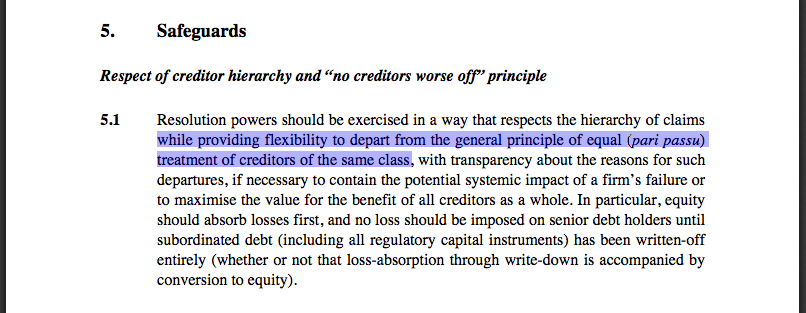
The FSB-recommended “powers” for the G20 nations’ new bank “resolution authorities” exhibit Orwellian deception and moral relativism at their finest. Embedded within their recommended “Safeguards”, is a caveat allowing those “resolution authorities” to act with impunity when it comes to the theft of depositors’ money:

“Resolution powers should be exercised in a way that respects the hierarchy of claims while providing flexibility to depart from the general principle of equal (pari passu) treatment of creditors of the same class…”

Click to enlarge

Click to enlarge

In other words, whether you have more than (say) 100,000 Euro/Dollars/Pounds deposited in a bank, or less, it is recommended (by Goldman Sachs’ FSB) that G20 governments legislate powers enabling their “resolution authorities” the “flexibility” to treat you any way they see fit.

“Equal treatment” is only a “general principle” to these people.

You may be wondering, if G20 governments all agreed to this way back in 2010, then why are we only now seeing nations from Canada to Europe beginning to draft and pass bank “bail-in” legislation, behind a smokescreen of lies and deceit?

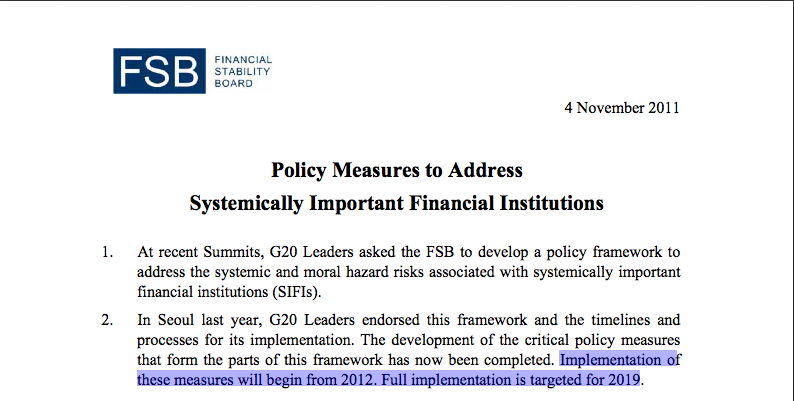
As can be seen from the FSB press release of November 2011:

“Implementation of these measures will begin from 2012. Full implementation is targeted for 2019.”

Click to enlarge

Click to enlarge

Some nations’ politicians are simply moving faster than others, in the coordinated drive towards the ultimate goal of stealing your savings, in order to “bail-in” so-called “systemically important” banks:

Earlier on Monday, Bank of England Deputy Governor Paul Tucker said the EU law on bank recovery and resolution would be a milestone towards a global system.

Vote NO To Stop The Bastards … AGAIN

4 Jun

Screen shot 2013-06-04 at 10.30.01 AM

Here we go again.

I encourage all readers to visit the nopowergrab.com.au website, and learn why you should vote NO to the referendum question that will be included with your ballot papers at the September election.

Has this referendum been proposed before?

Yes. Similar referendums were put by the Whitlam government in 1974 and the Hawke government in 1988. The 1974 referendum lost by 53.15 per cent of the total vote and
was only successful in New South Wales. The 1988 referendum lost with 66.39 per cent of the total vote and lost in all States. At both referenda the Australian people rejected Canberra’s power grab.

The fact that both of the major political parties support this referendum proposal, is yet another reason Why People Of Conscience Cannot Vote For Abbott.

Money For Nothing #147: $1.1m Rort Of Renewable Energy Certificate Scheme

2 Jun

fraud-magnifying-glass

The following story appeared in the print version of today’s Sunday Telegraph, pp. 9. For some reason, it was not published online for all to find:

Woman on $1.1 solar rort charges

Brendan Hills
Court reporter

A Sydney woman allegedly rorted the federal government’s renewable energy scheme of at least $1.1 million.

The Sunday Telegraph can reveal Toongabbie woman Lucie Yeung, 61, allegedly stole 37,600 renewable energy certificates from a solar panel business in Rhodes, in Sydney’s northwest, according to documents tendered to Burwood Local Court. It is one of 147 allegations of rorts of the government’s Renewable Energy Target scheme last year, according to the Energy Regulator’s annual report.

Most of the rorts related to the creation of fraudulent certificates for rooftop solar panels. The business, Inspire Solar, received an allocation of renewable energy certificates (REC) which could be traded as a form of currency under the government’s Renewable Energy Target scheme.

But Yeung allegedly logged in to the government’s REC registration website and transferred 37,600 of Inspire Solar certificates to her own business name.

It is understood Yeung has access to log-in details for the website because she worked in the industry.

Police conservatively estimated the value of each certificate to be $30, court documents said.

The value of the certificates can fluctuate, but police told Burwood Local Court the conservative value of the certificates allegedly stolen by Yeung was $1.128 million. Yeung was arrested in December and charged with dishonestly obtaining money by deception. She has pleaded not guilty. Yeung surrendered possession of the certificates when she was arrested.

Court documents said Yeung allegedly stole the certificates between January and July 2011.

The Sunday Telegraph understands Yeung did some work for Inspire Solar, one of countless companies which emerged to take advantage of the federal government’s solar rebate plan.

Yeung will appear in Burwood Local Court on June 27.

147 cases of rorting the Renewable Energy Target scheme alone — in 1 year — is an epidemic. And one that should surprise no one.

Here are just a few of the countless similar examples from other “green” currency schemes around the world:

Dec 20, 2012 — “Last year, Clean Green Fuels in Maryland was accused of selling 32 million fake biodiesel RIN credits to oil companies and brokers. In June 2012, CEO Rodney Hailey was convicted of wire fraud, money laundering, and of violating the Clean Air Act.

Absolute Fuels in Texas, was sent an EPA Notice of Violation in February this year. On July 19, owner Jeffrey David Gunselman was arrested for having allegedly created on his computer more than $50 million in RIN credits that he then sold. He didn’t even have the facilities to produce biodiesel. Earlier this month, he pleaded guilty to a laundry list of charges and is contemplating a maximum sentence of $20 million in fines and 1,268 years in the hoosegow.

Another Texas company, Green Diesel, received a Notice of Violation on April 30. The issue: 60 million fake RINs. By then, CEO Philip Rivkin had apparently skedaddled to Europe, out of harm’s way.”

Dec 14, 2012 –- “Five hundred German police and tax inspectors raided offices and residences connected with Deutsche Bank in Berlin, Frankfurt and Dusselforf, Wednesday over allegations of conspiracy involving over €300 million in carbon trading tax fraud.”

May 1, 2011 — “Europe’s biggest polluters have made billions out of the European Emissions Trading System (ETS). But a new briefing by Carbon Trade Watch (CTW) says the scheme will ensure industry will not have to cut its emissions until at least 2017.

The first phase of the ETS ran from 2005 to 2007. It made no dent in emissions. But power companies made about 19 billion euros by charging customers for the “cost” of permits they were given for free.

Manufacturers made about 14 billion euros in windfall profits with the same trick.”

And then there are the human rights abuses, of the world’s most needy, by the world’s most greedy, in the pursuit of profit from green “credits”:

Nov 30, 2011 — Carbon Credits in the ‘Valley of Death’

Uncovering the ugly effects of U.N.-backed ‘clean development’ in Honduras.

“Within the last two years more than 1,500 peasant families have lost their homes, schools and communities due to forceful evictions,” all of which have been linked to African Palm expansion efforts in the Aguan valley.

In July, the International Federation of Human Rights (FIDH) released a report on Aguan alleging evictions and armed attacks against local communities by “plantation security guards and private militia groups” allowed to act with impunity. The FIDH paper forced a couple of powerful European investors to back out of the Aguan CDM project and caused the European Parliament to order a fact-finding mission. So far, however, these measures don’t seem to have had any impact on the escalating violence.

Over just two days in August, skirmishes between guards and peasants left 11 people dead. A few days later, two more campesino leaders were assassinated–one of them, Pedro Salgado, was shot down in his home along with his wife. An entire peasant village was burned to the ground.

Sep 22, 2011 — “Across Africa, some of the world’s poorest people have been thrown off land to make way for foreign investors, often uprooting local farmers so that food can be grown on a commercial scale and shipped to richer countries overseas.

But in this case, the government and the company said the settlers were illegal and evicted for a good cause: to protect the environment and help fight global warming.

The case twists around an emerging multibillion-dollar market trading carbon-credits under the Kyoto Protocol, which contains mechanisms for outsourcing environmental protection to developing nations.

The company involved, New Forests Company, grows forests in African countries with the purpose of selling credits from the carbon-dioxide its trees soak up to polluters abroad. Its investors include the World Bank, through its private investment arm, and the Hongkong and Shanghai Banking Corporation, HSBC.”

“Green” schemes that financialise carbon dioxide, and that create new artificial “currency” in the form of “credits” for renewable energy schemes, are the latest playground for rampant greed and dishonesty.

Designed by bankers, for bankers.

And for the hordes of speculators, carpet-baggers, fraudsters, and other conscience-free crooks naturally attracted to any new profit-making opportunity.

The new class, of green collar criminals.

With 147 allegations of rorting in the renewable energy scheme alone — in just 1 year — clearly, Australia is no different to anywhere else.

And should the government’s planned transition from a carbon dioxide “tax” to a trading scheme come to fruition — I am one of those who remains wholly unconvinced that a Coalition government will revoke the scheme (consider the duplicity of Liberal state premiers Barry O’Farrell & Campbell Newman on the carbon tax) — then the incidents of fraud will only grow exponentially.

As we have seen previously, the government’s own Regulatory Impact Statement (RIS) shows that the so-called “regulation” of emissions by the “biggest polluters” is a complete joke — little more than a propaganda exercise, aimed at maintaining “public confidence” in the scheme (see “Government’s RIS Admits Carbon Emissions ‘Audits’ A Propaganda Exercise”).

And the Auditor-General’s report on the OSCAR computer system used by “polluters” to self-report their emissions, is more of the same (see “An OSCAR For The Clean Energy Future”).

“Once More Unto The Breach, Dear Friends”

1 Jun

18cavalryintothebreach

Barnaby Joyce, Nationals’ 2013 Federal Council, Senate Leader’s Address, June 1, 2013:

In March 1913, under a tree at Kellerberrin in Western Australia, a group of farmers, frustrated with the influence of urbanised power of the capital city, and the political direction of Labor, formed the Farmers and Settlers’ Association known today as the National Party.

100 years later, the same party is about to engage on a great political battlefield.

Our opponent has one cause but many banners.

They are called independent.

They are called the Greens.

They are called Labor.

They are called the Palmer United Party.

They are called the Katter Australia Party and others.

For all of these groups the destruction of the Nationals takes much of their time, time that they should be using to concentrate on issues that help Australians.

They are sustained by vitriol and driven by anger.

They will bend the truth.

They will assert that promise equals delivery and ignore any reference to their responsibility as to where our nation now finds itself.

They must stand behind being responsible for $257.4 billion gross debt.

They must stand behind $370 billion in forward debt.

They must stand behind the defence spending of our nation now at the lowest ebb in GDP terms since 1938.

They must stand behind the financial, human and animal welfare disaster in the cattle industry.

They must accept that an NBN with no cost-benefit analysis has sucked up $5.3 billion already, and is on the way to a $90 billion debt that will take money away from other worthwhile future spending initiatives, such as perhaps a future drug to cure cancer.

They must accept that NBN’s largest income item is the interest on the money they have borrowed and that is a business fiasco.

Our adversary will stand at a distance to the detail of the debate because there the truth is grey and the audience is deprived of the clarity to call them to account.

Our opponent will deify their own assertion of long past insults and try to inspire a sectarian balkanisation, a tribal, sectarian fight based on their own divisive mythology.

As we borrow Kipling, we will keep our head when all about are losing theirs and blaming it on us.

We will trust ourselves when all others are doubting, but we will make allowance for their doubts.

We will be lied about but we will not deal in lies.

We may be hated back but we will not give way to hate.

And we will walk humbly with the people we intend to serve.

Our message is one of a future.

We have a fought for and achieved a dam policy to build dams and develop the next stage of agriculture. I am Deputy Chair of the Coalition’s Dams task group.

We have fought to have a new zonal rebate in a trial of five local government areas to turn fly-in, fly-out into fly-in and live.

We have worked for and delivered the Infrastructure Partnerships Scheme to build the inland rail, or ports, dams or new abattoirs.

When you see the University of New England you see the work of the National party, and the work of the former member for New England, David Drummond.

When you drive on a federally funded New England Highway you see the work of the National party and the Rt Hon Ian Sinclair.

When you see a Royalties to Regions program you see the work of the National party and the Rt Hon John Anderson.

When you collect your Diesel Fuel Rebate you are a benefactor of the work of the National party.

When you see upgrades to regional hospitals and universities that money is being provided from the surpluses of the last Liberal and National government.

When small business needs the safety valve to allow their voice to be heard on issues it is the National Party door that it is open.

When the insane idea that a broad based consumption tax on power in Australia would affect the global climate it was the National party that stood up and lead the way.

When Australia has concerns of the excessive foreign ownership on our sacred asset, our land, it is the Nationals that are derided in many quarters for taking up the fight.

We take on these challenges not because they are easy, not because they are hard, but because they are right.

The National Party are people who through my past near 20 years with them make it their cause to quietly do what is right.

Good people who accept that their duty to their nation is to quietly be part of the solution, to make the decisions that put our nation in safe hands, to offer a minor sacrifice for the greater good, rather than a partisan delivery at the expense of the country.

What is our vision?

  • that we are not shy of our Christian heritage
  • that we believe that the defence and ownership of our soil is paramount
  • that our cities will have on its skyscrapers the signage of international champions that are Australian
  • that the prudent culture of the family farm become the prudent nature of our nation’s Treasury
  • our culture is Australian families owning Australian homes and Australian families making a decent living on their family farm
  • our caution is well alive to the threats to our nation no better displayed than by the theft of plans for the ASIO building.

This election allows us the philosophical battleground to give to the views of this conference, especially where we have Nationals candidates standing in:

Capricornia
Kennedy
Richmond
Page
Lyne
New England
Hunter
Throsby
Lingiari
Barker
O’Connor

… and Senate seats in Queensland, New South Wales, Western Australia and South Australia, yes especially James in South Australia.

One of the interesting moments in the country hall meetings in New England comes when I ask the question that if the independent wins, and the polling is correct in pointing to a Coalition government, who in cabinet will ventilate the concerns of the electorate?

Why vote yourself into opposition? Why give Ms Gillard a vote of confidence. Do we honestly believe this country could take three more years of this government?

My final point is to say thank you for the overwhelming solidarity, the understanding of Queensland and the welcome home by New Englanders.

This is not a valedictory it is a staging post, it is a platoon harbour, it is a tactics session, it is the embarkation point from which others who believe in our nation’s journey, our nation’s future, will join us on.

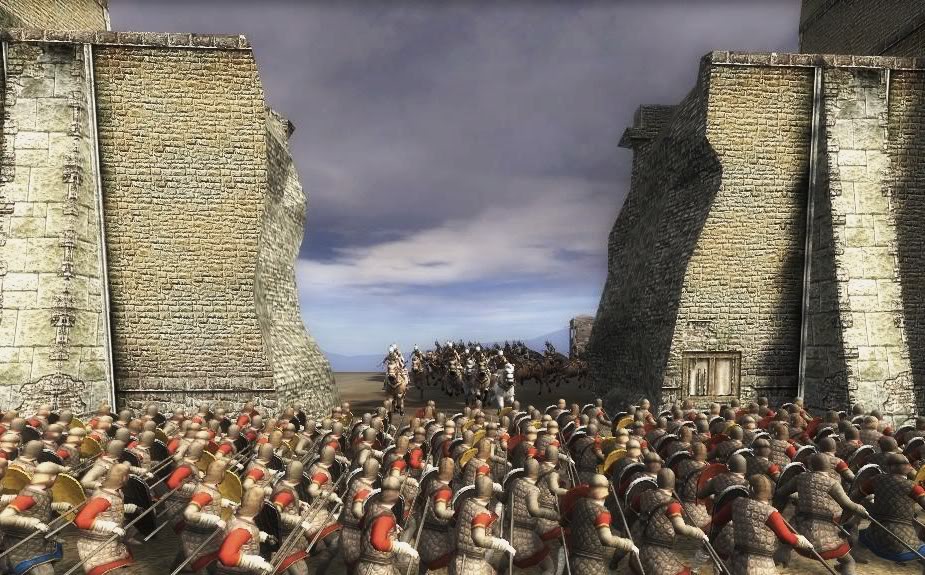
So once more, unto the breach dear friends, once more.


Why People Of Conscience Cannot Vote For Abbott

1 Jun
Illustration: Rocco Fazzari

Illustration: Rocco Fazzari

Doubtless some, perhaps many readers of this blog have an inclination to vote for the Liberal Party at the next election.

Your humble blogger will not be one of them.

Here is why (my emphasis added):

When two tribes go to bed

The electoral funding deal was the bad side of that rare commodity bipartisanship, as the public reaction made clear.

Tony Abbott began his public backdown on Thursday morning by saying: “Well, it is pretty clear the people have spoken and the electoral funding bill is dead.” But which people? It’s true that quite a few voters had spoken over the previous two days, phoning and emailing their MPs. “The phones were ringing off the hook,” said one.

Voters were angered to learn that there was a Liberal-Labor agreement to help themselves to nearly $60 million in taxpayer funds to pay for elections. There’s already public funding to the political parties – the taxpayer gave the parties $2.31 for each vote they received at the least election – totalling $53 million at the 2010 poll.

But the news first emerged late on Monday night, and not fully until Tuesday, that the parties had cut a deal to add a further $58.7 million over four years.

The people whose voices rang loudest in Abbott’s ear were not the voters but members of his own party, at every level. And everyone, from the public to Abbott’s own inner circle, was affronted that they’d heard nothing about it until the agreement had already been struck in secret between the national secretaries and leaders of the parties.

Abbott’s shadow ministers were upset that they had sat through a shadow ministry meeting on Monday on many matters, but no one had mentioned this. His backbench was cranky that they’d sat through a party-room meeting on Tuesday where nothing was said.

And then, in the decisive moment, he consulted the senior officers of his own party on Wednesday night.

In a phone hook-up with the Liberal national executive, Abbott met a unified chorus of opposition from the party’s state divisions. The presidents of the Liberal party in every state spoke against the deal.

Even the man expected to be keenest to get more money, the official responsible for raising funds for the Liberals at the national level, the party treasurer, opposed the deal.

“I would rather treble my efforts than agree to this,” businessman Phillip Higginson told the conference call. By the time Abbott went to bed that night, he knew the funding deal was finished. The next morning he convened a meeting of his inner circle, the Liberal leadership group, and reports emerged that the group had “rolled” Abbott on the funding deal.

After news of the deal emerged, [Liberal Party federal director, Brian] Loughnane and Abbott’s office had repeatedly assured Liberal MPs that there had been discussions with Labor, but no deal.

Technically, they were protected by the fact that there could be no final, formal deal because the government had not yet shown the Liberals the final bill that it would be submitting to the parliament.

So Liberals were even more outraged when the Attorney-General, Labor’s Mark Drefyus, released to reporters a copy of a letter signed by Abbott the previous Friday that said:

“Thank you for your letter dated 16 May 2013 regarding the government’s intention to introduce and pass the Commonwealth Electoral Amendment (Political Donations and Other Measures) Bill 2013 in the current winter sittings.”

In the letter, Abbott said he had been briefed on the agreement Loughnane had struck with Labor and “I am satisfied with the agreement reached and indicate the Coalition’s intention to support the legislation and to deal with it, as requested, before the end of the sittings. I note that I have been provided with a near-final draft of the bill.”

One of Abbott’s shadow ministers remarked: “The mood across the party was feral. I’ve never seen the grassroots react so strongly against anything they way they reacted against this.”

Why is it that people of conscience cannot vote for Abbott?

It is a simple matter of integrity. And prudence.

When no one knew about it, Abbott supported the parties’ funding deal.

He only backed down, when folks spat the dummy.

Your humble blogger simply does not accept the rationalisation — the attempt to excuse his first action — that “at least he listened”.

That’s fine when you’re in opposition.

What about when you’re in power?

We have already seen Gillard demonstrate the corruption of power.

“There will be no carbon tax under a government I lead”

I think we have now seen Abbott present us all with a vivid glimpse of his true character.

“Whatever it takes.”

Or perhaps more accurately, “Whatever I can get away with.”

And what of the Labor Party?

Needless to say, they are, with the exception of two, even worse:

Labor, on the other hand, was much more thoroughgoing in its internal consultations. Labor’s negotiator and national secretary, George Wright, had not only won the approval of his leader, the Prime Minister, but he had also put the deal to Labor’s national executive for formal approval. The executive passed it unanimously on March 13. It then went to the caucus committee on electoral matters.

And for Labor, this was where the trouble began. As soon as the detail was explained to the committee on Monday morning, two of its members objected forcefully. John Faulkner and Daryl Melham spoke against the bill, and they carried their objections into the full Labor caucus meeting on Tuesday.

Faulkner is a party elder and a long-time campaigner for transparency and integrity; Melham is former secretary of the caucus who has been a fellow campaigner.

They couldn’t believe that the party on trial in ICAC for corruption, the party of Eddie Obeid and Ian Macdonald, the party whose former national president Michael Williamson has been charged with fraud, the party led by a prime minister whose biggest liability is public trust, could propose a bill that would help itself to tens of millions of public funds yet preserve many of the opacities and loopholes of funding system. Melham told the caucus: “You don’t need $10 million a year to do administration work, and the punters won’t wear it.”

Faulkner won widespread media coverage for his remark: “I am no longer angry or disappointed. I am just ashamed of this bill.” They were the only voices raised against it in the caucus. It was reports of the Faulkner-Melham objections that first rang the public alarm bell, the bell that then sounded so loudly across the way in the offices of Liberal MPs.

They had broken the conspiracy of silence and it foreshadowed the end of the deal.

Neither of the major parties can be trusted with power.

That much is crystal clear.

So, do you vote for (what you hope is) the lesser of two evils?

Do you look for alternatives; perhaps Katter’s Australia Party, or Clive Palmer’s PUP?

Or do you act on principle and Conscience, recalling that your vote is a legal expression of your desire for a particular person/party to represent your wishes, and, that you are only required to attend a polling booth and have your name crossed off … and vote for none of them.

Design a site like this with WordPress.com
Get started